Railroads, Miners, and Disorder in Pennsylvania Coal Country
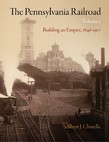
If the railroads won the Gilded Age, the coal industry lost it. Railroads epitomized modern management, high technology, and vast economies of scale. By comparison, the coal industry was embarrassingly primitive. This book shows how disorder in the coal industry disrupted the strategic plans of the railroads.
"Do not think of the Pennsylvania Railroad as a business enterprise," Forbes magazine informed its readers in May 1936. "Think of it as a nation." At the end of the nineteenth century, the Pennsylvania Railroad was the largest privately owned business corporation in the world. In 1914, the PRR employed more than two hundred thousand people-more ......
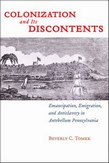
Emancipation, Emigration, and Antislavery in Antebellum Pennsylvania
Examination of the complexity of the colonization movement, describing the difference between those who supported colonization for political and social reasons and those who supported it for religious and humanitarian reasons
Kayaking and Canoeing the Keystone State's Rivers and Lakes
Pennsylvania contains more miles of rivers and creeks than any state but Alaska, making the Keystone State a prime destination for canoers and kayakers. This guide contains information for 211 of the commonwealth's rivers, creeks, lakes, ponds, and reservoirs.
Examines the folk origins of Christmas in the Keystone State. This book records holiday traditions from the eighteenth century through the early twentieth century, including mummers, Christ-Kindel and Kriss Kringle, Christmas trees and trimming, Belsnickels, the Philadelphia carnival of horns, and Moravian pyramids and putzes.
Revised and expanded with recently uncovered information, this work features detailed maps of escape routes and networks, and eyewitness accounts of fugitives. Organised in antebellum America to help slaves escape to freedom, the Underground Railroad was cloaked in secrecy and operated at great peril to everyone involved.
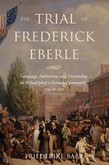
Language, Patriotism and Citizenship in Philadelphia's German Community, 1790 to 1830
In 1816, the state of Pennsylvania tried fifty-nine German-Americans on charges of conspiracy and rioting. They had conspired to prevent with physical force the introduction of English language into the largest German church in North America, Philadelphia's Lutheran congregation of St Michael's and Zion. This book deals with this topic.
Cemeteries, abandoned buildings, and roads to nowhere are all that remain of several once-thriving towns in Pennsylvania. This guidebook profiles 46 locations that have been abandoned or left to ruin, and some that have seen life as historic sites, with discussions on their history, daily life, fall, and condition.