Governing Life and Livelihood in the Philippine Uplands
For the Sake of Forests and Gods documents the consequences of nonstate actors impinging on the existence of Indigenous peoples in the remote highlands of Palawan Island, the Philippines. Nimble, focused, and well-funded, religious and environmental organizations increasingly assume governmental authority over the lives and livelihoods of the ......
Governing Life and Livelihood in the Philippine Uplands
For the Sake of Forests and Gods documents the consequences of nonstate actors impinging on the existence of Indigenous peoples in the remote highlands of Palawan Island, the Philippines. Nimble, focused, and well-funded, religious and environmental organizations increasingly assume governmental authority over the lives and livelihoods of the ......
A view into the diverse culture of the Philippines in the sixteenth and seventeenth centuries Although Manila, capital city of the Philippines, played a critical role in economic and cultural exchanges between the East and the West during the sixteenth and seventeenth centuries, little is known about what life was like for its residents ......
From the late eighteenth century, the hinterlands of Northern Luzon and its Indigenous people were in the crosshairs of imperial and capitalist extraction. Combining the breadth of global history with the intimacy of biography, Adrian De Leon follows the people of Northern Luzon across space and time, advancing a new vision of the United States's ......
From the late eighteenth century, the hinterlands of Northern Luzon and its Indigenous people were in the crosshairs of imperial and capitalist extraction. Combining the breadth of global history with the intimacy of biography, Adrian De Leon follows the people of Northern Luzon across space and time, advancing a new vision of the United States's ......
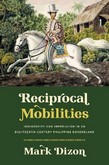
Indigeneity and Imperialism in an Eighteenth-Century Philippine Borderland
Throughout the eighteenth century, independent Indigenous people from the borderlands of the Philippines visited the centers of Spanish colonial rule in the archipelago. Their travels are the counternarratives to one-dimensional stories of Spanish conquest of, and Indigenous resistance in, interior frontiers. Indigenous inhabitants on the island ......
Indigeneity and Imperialism in an Eighteenth-Century Philippine Borderland
Throughout the eighteenth century, independent Indigenous people from the borderlands of the Philippines visited the centers of Spanish colonial rule in the archipelago. Their travels are the counternarratives to one-dimensional stories of Spanish conquest of, and Indigenous resistance in, interior frontiers. Indigenous inhabitants on the island ......
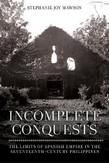
The Limits of Spanish Empire in the Seventeenth-Century Philippines
In Incomplete Conquests, Stephanie Joy Mawson uncovers the limitations of Spanish empire in the Philippines, unearthing histories of resistance, flight, evasion, conflict, and warfare from across the breadth of the Philippine archipelago during the seventeenth century. The Spanish colonization of the Philippines that began in 1565 has long been ......
World War II Guerrilla Resistance Against the Japanese in the Philippines
Over the course of World War II, guerrillas from across the Philippines opposed Imperial Japan's occupation of the archipelago. Although the guerrillas never possessed the combat strength to overcome the Japanese occupation on their own, they disrupted operations, kept the spirit of resistance alive, provided important intelligence to the Allies, ......