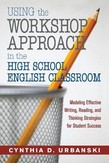
Modeling Effective Writing, Reading, and Thinking Strategies for Student Success
Everybody wins when you practice the workshop approach in high school English! Do you find that preparing for standardized tests interferes with teaching advanced thinking, reading, and writing skills in a meaningful way? Do you want to balance test preparation with more creative activities? Success in school and beyond depends on one's ability to read fluently, write coherently, and think critically. This handbook uses the workshop model for exponentially increasing adolescents' abilities in these three key areas. This practical guide addresses the daily running and practice of a workshop-based classroom, using research and the author's own experiences to illustrate how to establish a workshop that: Fosters lasting learning while reinforcing the skills needed for standardized tests Teaches audience and purpose as a vehicle to style and structure Provides a supportive and lively environment in which students are comfortable enough to take risks and share original ideas Try Urbanski's approach to teaching literacy analysis and mentoring student writers, and discover just how rewarding the workshop experience can be!
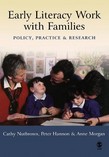
'The 'Raising Early Achievement in Literacy' or REAL project was the result of a collaboration between the University of Sheffield, Sheffield LEA and schools and centres across the city of Sheffield, starting in 1995. For those interested in developing their own projects in this field it will provide essential information. It contains many examples of work carried out this in this project. Many examples are given that could prompt practitioners to identify ways in which they too could focus their own input with children or help their parent group to interact with their children's developing literacy' - Early Years Update 'A "must read" for practitioners, policy makers and researchers interested in the detail and the theory underpinning this important family literacy initiative' - Neil McClelland OBE, Director, National Literacy Trust 'The REAL Project is one of the best conceptualized, most intensively documented and successful British family literacy initiatives and the book provides a comprehensive overview of all aspects of this powerful project. It is essential reading for anyone working alongside families to promote children's early development' - Professor Nigel Hall, Institute of Education, Manchester Metropolitan University 'The project described in detail in this book is arguably the most important and well-researched UK initiative for developing early literacy work with parents of young children...Readers will find inspirational case studies ...There are illuminating insights into children's perspectives on family literacy, including good news about fathers and boys...Don't miss it!' - Marian Whitehead, Nursery World Anyone involved in the field of early-childhood literacy should be familiar with the work of the REAL (Raising Early Achievement in Literacy) Project. Here, leading members of the project team Cathy Nutbrown, Peter Hannon and Anne Morgan, discuss the research. An essential guide to the subject, this book will be of great practical use to all in the field of early childhood literacy: students, practitioners and course leaders on literacy and early childhood courses. The authors discuss the policy contexts of early-childhood and literacy today and use their experience of the REAL project to discuss and illustrate practical research and evaluation strategies for family literacy workers. They examine the issues from all perspectives: teachers, parents and young children. The book concludes with examples of how the theoretical framework of the REAL Project (ORIM) has been used by other practitioners and an examination of the implications of such work for the future of early-childhood and literacy policy development. The book also includes: - An informative update on research in the field - A description of the family literacy programme - Useful activities for family literacy work - Guidelines for interviewing parents and children - Suggestions for how to evaluate family literacy work - Ideas for practical sessions for professional development for family literacy workers - A Guide to further reading This is an important book and should be read by anyone wishing to keep pace with the field of family literacy in early childhood education.
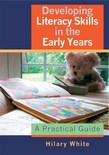
Many young children need targeted support and encouragement to help develop their literacy skills. Developing Literacy Skills in the Early Years contains tried and tested activities to improve listening, verbal reasoning and language skills in young children and shows you how to turn theory into fun, practical ideas for the classroom. The author shows how to link activities to the Early Learning Goals and the National Literacy Strategy and the book includes: lesson activities using puppets, nursery rhymes, story boxes and picture books; suggestions for using role-play; ideas for organising your play setting to encourage literacy-related play; lesson plans; assessment guidelines; lists of resources; a selection of photocopiable material.
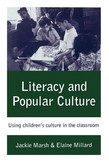
Most children engage with a range of popular cultural forms outside of school. Their experiences with film, television, computer games and other cultural texts are very motivating, but often find no place within the official curriculum, where children are usually restricted to conventional forms of literacy. This book demonstrates how to use ......
Many young children need targeted support and encouragement to help develop their literacy skills. Developing Literacy Skills in the Early Years contains tried and tested activities to improve listening, verbal reasoning and language skills in young children and shows you how to turn theory into fun, practical ideas for the classroom. The author shows how to link activities to the Early Learning Goals and the National Literacy Strategy and the book includes: lesson activities using puppets, nursery rhymes, story boxes and picture books; suggestions for using role-play; ideas for organising your play setting to encourage literacy-related play; lesson plans; assessment guidelines; lists of resources; a selection of photocopiable material.
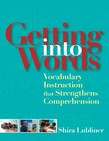
Vocabulary Instruction That Strengthens Comprehension
This practical book is a guide for general and special educators who want to improve the vocabulary of their students. In addition to building children's word knowledge, the book emphasizes teaching students how to learn new vocabulary.
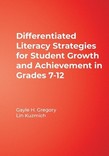
From best-selling authors Gayle Gregory and Lin Kuzmich comes a versatile handbook for middle school and high school educators who need to differentiate literacy instruction for adolescent and teen learners at different stages of development along the literacy continuum. Covering the relevant brain research and specific instructional and assessment strategies for teens, Differentiated Literacy Strategies for Student Growth and Achievement in Grades 7-12 pays special attention to hooks that appeal to older learners with varying degrees of skills and competencies. Contains more than 100 planning models, checklist, rubrics, choice boards, lesson plans, and more.
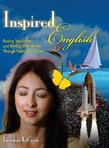
Raising Test Scores and Writing Effectiveness Through Poetry and Fiction
A teacher's guide to teaching middle school and high school English and building literacy skills in even the most reluctant readers. Lorraine LaCroix shows the reader how carefully chosen poems and fiction can "hook" otherwise apathetic English students - by making an emotional connection, the teacher makes her lessons personally relevant and ......
Raising Test Scores and Writing Effectiveness Through Poetry and Fiction
A teacher's guide to teaching middle school and high school English and building literacy skills in even the most reluctant readers. Lorraine LaCroix shows the reader how carefully chosen poems and fiction can "hook" otherwise apathetic English students - by making an emotional connection, the teacher makes her lessons personally relevant and ......