Much of today's writing on children treats the child of any age as a problem or a set of problems to be solved, effectively reducing the child to a complex of biological and chemical factors, explainable in scientific terms, or regarding children as objects of adult control. In contrast, Martin Marty here presents the child as a mystery who ......
Discusses a present-focused therapy that first looks at a couple's past experiences for ways to improve their interpersonal exchanges. This work presents an approach that works from a perspective that motivates a couple to stay together and helps them to focus on this and break away from past patterns of thought and behavior.
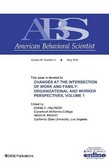
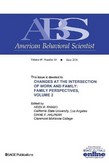
The largest social change in the last 50 years has been the increase in the number of women, especially mothers of young children, in the formal work force. The May 2006 and June 2006 volumes of American Behavioral Scientist look at how this powerful transformation has impacted the venerable foundations of work and family, and reflect on the changes needed in organizational practices, social and public policy, families, and society in general to adapt to the changing 21st century workforce. Changes at the Intersection of Work and Family: Organizational and Worker Perspectives, Volume 1 (May 2006), edited by Diane F. Halpern and Heidi R. Riggio, focuses on organizational and worker perspectives. Many studies have shown that there is a substantial and practical return-on-investment for employers that adopt and commit to policies that help employees better manage the needs of both work and family, including fewer missed days of work, fewer "come late" or "leave early" days, reduced employee turnover, improved morale, and a better commitment to the employer. Volume 1 emphasizes topics such as the need for improved work-life policies, successful and promising public policy approaches, long-term work-life case studies from IBM, the dual-earner 60-hour work week, work-family and obesity and other health issues, the real and perceived negative consequences of taking advantage of family-friendly policies, the differences between male and female caregivers, and a whole-life approach to managing work and family. Changes at the Intersection of Work and Family: Family Perspectives, Volume 2 (June 2006), edited by Heidi R. Riggio and Diane F. Halpern, highlights family perspectives and issues such as working parents' expanding need for child care, after-school care, elder care, and medical leave. The six articles in this volume examine how policymakers and organizations can help maximize working families' health, productivity and happiness. Volume 2 covers subjects such as maternal employment and healthy child and young adult development, how working affects mothers' self-identity and other positive factors, the stress of parents coping with after-school child care, why community programs and support such as after-school programs are so necessary to working families, and how dual-earning households mutually influence each others retirement planning. The same important point is made in all of the articles in both volumes: there are tremendous changes taking place in families and in workplaces, and social, organizational, and public policies must be better aligned to meet to the needs of and to benefits from the greater diversity in today's families and workforce. Written by outstanding scholars and researchers in public policy, economics, sociology, psychology, business, and family studies, including Barbara Gault, Vicky Lovell, E. Jeffrey Hill et al., Tammy D. Allen, Jeremy Armstrong, Robert Drago et al., Noelle Chesley, Stewart D. Friedman, Allen W. Gottfried, Adele E. Gottfried, Patricia M. Raskin, Rosalind C. Barnett, Karen C. Gareis, Marcie Pitts-Catasouphes, and Phyllis Moen, the articles in both volumes ask critical questions and offer some interesting and sensible solutions to the changing realities of work and family. These volumes should be in the library and in the classrooms of everyone interested in Public Policy, Business/Management, Psychology, Family Studies, Sociology, and Economics.
The largest social change in the last 50 years has been the increase in the number of women, especially mothers of young children, in the formal work force The May 2006 and June 2006 volumes of American Behavioral Scientist look at how this powerful transformation has impacted the venerable foundations of work and family, and reflect on the changes needed in organizational practices, social and public policy, families, and society in general to adapt to the changing 21st century workforce. Changes at the Intersection of Work and Family: Organizational and Worker Perspectives, Volume 1 (May 2006), edited by Diane F. Halpern and Heidi Riggio, focuses on organizational and worker perspectives. Many studies have shown that there is a substantial and practical return-on-investment for employers that adopt and commit to policies that help employees better manage the needs of both work and family, including fewer missed days of work, fewer "come late" or "leave early" days, reduced employee turnover, improved morale, and a better commitment to the employer. Volume 1 emphasizes topics such as the need for improved work-life policies, successful and promising public policy approaches, long-term work-life case studies from IBM, the dual-earner 60-hour work week, work-family and obesity and other health issues, the real and perceived negative consequences of taking advantage of family-friendly policies, the differences between male and female caregivers, and a whole-life approach to managing work and family. Changes at the Intersection of Work and Family: Family Perspectives, Volume 2 (June 2006), edited by Heidi Riggio and Diane F. Halpern, highlights family perspectives and issues such as working parents' expanding need for child care, after-school care, elder care, and medical leave. The six articles in this volume examine how policymakers and organizations can help maximize working families' health, productivity and happiness. Volume 2 covers subjects such as maternal employment and healthy child and young adult development, how working affects mothers' self-identity and other positive factors, the stress of parents coping with after-school child care, why community programs and support such as after-school programs are so necessary to working families, and how dual-earning households mutually influence each others retirement planning. The same important point is made in all of the articles in both volumes: there are tremendous changes taking place in families and in workplaces, and social, organizational, and public policies must be better aligned to meet to the needs of and to benefit from the greater diversity in today's families and workforce. Written by outstanding scholars and researchers in public policy, economics, sociology, psychology, business, and family studies, including Barbara Gault, Vicky Lovell, E. Jeffrey Hill et al., Tammy D. Allen, Jeremy Armstrong, Robert Drago et al., Noelle Chesley, Stewart D. Friedman, Allen W. Gottfried, Adele E. Gottfried, Patricia M. Raskin, Rosalind C. Barnett, Karen C. Gareis, Marcie Pitts-Catasouphes, and Phyllis Moen, the articles in both volumes ask critical questions and offer some interesting and sensible solutions to the changing realities of work and family. These volumes should be in the library and in the classrooms of everyone interested in Public Policy, Business/Management, Psychology, Family Studies, Sociology, and Economics.
In "Couples Therapy for Extramarital Affairs", Dr. Don-David Lusterman demonstrates his empathic, psychoeducational approach to working with couples in which one partner has had an affair. Therapy begins with acknowledgement of the "victim" status of the partner who discovered the affair. Dr. Lusterman then works to restore trust and helps the ......
Demonstrating that the family is both distinctive in its own right and deeply interwoven with other institutions, this title examines the roles of education, work, leisure, consumption, legal regulation, public administration, and biology in shaping the ways we court and marry, bear and raise children, and make and break family bonds.
Helping Your Teen Make Healthy Choices about Eating and Exercise in a Weight-Obsessed World
Shows parents how to strike the difficult balance between bolstering self-esteem and offering constructive advice. This book provides science-based, practical ideas for instilling healthy eating and exercise habits, educating teens about nutrition and portion size, and talking about body image.
Helping Your Teen Make Healthy Choices about Eating and Exercise in a Weight-Obsessed World
Helps strike the balance between bolstering self-esteem and offering constructive advice. Drawing on her study, Project EAT (Eating Among Teenagers), and her experience as a mother of four, the author offers ideas for instilling healthy eating and exercise habits, educating teens about nutrition and portion size, and talking about body image.