This textbook presents readers with a practical framework for understanding and applying statistical techniques in behavioral and social sciences. It focuses on equipping readers with the foundational skills they need to apply statistical procedures to real-world scenarios and data.
A Practical Approach for Research Across the Social Sciences
The authors use their depth of experience designing and updating Dedoose (R), as well as their published research, to give readers practical strategies for using the program from a wide range of research studies. Case study contributions by outside researchers provide readers with rich examples of how to use Dedoose (R) in practical, applied social science, and health settings.
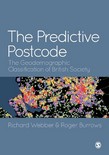
The Geodemographic Classification of British Society
It is not lost on commercial organisations that where we live colours how we view ourselves and others. That is why so many now place us into social groups on the basis of the type of postcode in which we live. Social scientists call this practice "commercial sociology". Richard Webber originated Acorn and Mosaic, the two most successful geodemographic classifications. Roger Burrows is a critical interdisciplinary social scientist. Together they chart the origins of this practice and explain the challenges it poses to long-established social scientific beliefs such as: the role of the questionnaire in an era of "big data" the primacy of theory the relationship between qualitative and quantitative modes of understanding the relevance of visual clues to lay understanding. To help readers evaluate the validity of this form of classification, the book assesses how well geodemographic categories track the emergence of new types of residential neighbourhood and subject a number of key contemporary issues to geodemographic modes of analysis.
The Geodemographic Classification of British Society
It is not lost on commercial organisations that where we live colours how we view ourselves and others. That is why so many now place us into social groups on the basis of the type of postcode in which we live. Social scientists call this practice "commercial sociology". Richard Webber originated Acorn and Mosaic, the two most successful geodemographic classifications. Roger Burrows is a critical interdisciplinary social scientist. Together they chart the origins of this practice and explain the challenges it poses to long-established social scientific beliefs such as: the role of the questionnaire in an era of "big data" the primacy of theory the relationship between qualitative and quantitative modes of understanding the relevance of visual clues to lay understanding. To help readers evaluate the validity of this form of classification, the book assesses how well geodemographic categories track the emergence of new types of residential neighbourhood and subject a number of key contemporary issues to geodemographic modes of analysis.
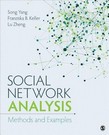
This innovative book takes a conceptual rather than a mathematical approach as it discusses the connection between what SNA methods have to offer and how those methods are used in research design, data collection, and analysis. Four substantive applications chapters provide examples from politics, work and organisations, mental and physical health, and crime and terrorism studies.
CCTV for Wildlife Monitoring is a handbook on the use of CCTV in nature watching, conservation and ecological research. CCTV offers a unique ability to monitor wildlife in real time, stream video to the web, capture imagery of fast-moving species or cold animals such as wet otters or fish and maintain monitoring over long periods of time in a ......
CCTV for Wildlife Monitoring is a handbook on the use of CCTV in nature watching, conservation and ecological research. CCTV offers a unique ability to monitor wildlife in real time, stream video to the web, capture imagery of fast-moving species or cold animals such as wet otters or fish and maintain monitoring over long periods of time in a ......
We are swimming in a world of data, and this handy guide will keep students afloat while they learn to make sense of it all. David Herzog, a journalist with more than 15 years of experience using data analysis to transform information into captivating storytelling, introduces readers to the fundamentals of data literacy. Assuming the reader has no advanced knowledge of data analysis or statistics, the book shows how to create insight from publicly-available data. Extensively illustrated, step-by-step instructions within a concise, yet comprehensive, reference will help readers to master: What data is and what it isn't, How to develop a "database set of mind," How to gather data, How to evaluate data, How to clean up "dirty data," How to visualize data, and How to use tools for data analysis and visualization.
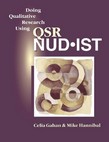
This is a practical guide to using QSR NUD.IST - a software package for development, support and management of qualitative data analysis (QDA) projects. The book takes a user's perspective and presents the software as a set for approaching a range of research issues and projects. It: introduces and explains the purpose of the software and its ......