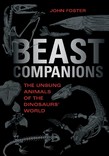
Despite their fame and reputation, dinosaurs represent only half the story of the Mesozoic Era. In Beast Companions: The Unsung Animals of the Dinosaurs' World, paleontologist John Foster explores the often-overlooked animals that coexisted with them. These ancient species, often equally remarkable as their dinosaur neighbors, can provide valuable ......
How can paleontologists know what a living dinosaur was like more than a hundred million years ago, particularly when only partial skeletons remain? Focusing on one large carnivorous dinosaur, Acrocanthosaurus ("high-spined lizard"), paleontologist Kenneth Carpenter explains the process, pairing scholarly findings with more than 75 color ......
Britain and Ireland between the Middle Ages and the Industrial Revolution
What was the state of wildlife in Britain and Ireland before modern records began? The Atlas of Early Modern Wildlife looks at the era before climate change, before the intensification of agriculture, before even the Industrial Revolution. In the sixteenth to eighteenth centuries, beavers still swim in the River Ness. Isolated populations of ......
Vertebrate Evolution and Palaeontology from an African Perspective offers an up-to-date account of the 4.4-billion-year history of life on Earth using the African context and fossil record, and emphasising local contributions, both scientific and cultural. In rich and fascinating detail, the authors present the origin and evolution of all major ......
Sharing rich findings uncovered in recent decades from research in skeletal biomechanics, Functional Inference in Paleoanthropology examines how bone adapts over the lifespan, what environmental factors influence its quality, and how developmental constraints limit the skeleton's adaptive potential over evolutionary time.
Take a virtual tour of the National Museum of Natural History with this high-interest STEAM reader! Learn about the challenges involved with designing fossil exhibits and how studying fossils helps scientists learn about prehistoric species.
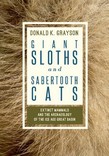
Extinct Mammals and the Archaeology of the Ice Age Great Basin
As the Ice Age came to an end, North America lost a stunning variety of animals. Mammoths, mastodons, ground-dwelling sloths the size of elephants, beavers the size of bears, pronghorn antelope the size of poodles, llamas, and carnivores to chase them-sabertooth cats, dire wolves, American lions and cheetahs; these and many more were gone by ......
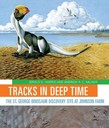
The St. George Dinosaur Discovery Site at Johnson Farm
In February 2000, while excavating his property in St. George, Utah, Sheldon Johnson turned over a piece of ground and discovered a fully preserved dinosaur footprint. That track was the first of many fossils to be uncovered. Five years later, the St. George Dinosaur Discovery Site (SGDS) at Johnson Farm was established to preserve one of the ......
Hadrosaurs-also known as duck-billed dinosaurs-are abundant in the fossil record. With their unique complex jaws and teeth perfectly suited to shred and chew plants, they flourished on Earth in remarkable diversity during the Late Cretaceous. So ubiquitous are their remains that we have learned more about dinosaurian paleobiology and paleoecology ......