"A unique and important resource, full of critical practical knowledge and technical details made readily accessible." - Tiffany Ito, University of Colorado at Boulder "A comprehensive and engaging guide to EEG methods in social neuroscience; Dickter and Kiefabber offer practical details for conducting EEG research in a social/personality lab, with a broad perspective on how neuroscience can inform psychology. This is a unique and invaluable resource - a must-have for scientists interested in the social brain." - David M. Amodio, New York University Electroencephalography (EEG) has seen a dramatic increase in application as a research tool in the psychological sciences in recent years. This book provides an introduction to the technology and techniques of EEG in the context of social and cognitive neuroscience research that will appeal to investigators (students or researchers) wishing to broaden their research aims to include EEG, and to those already using EEG but wishing to expand their analytic repertoire. It can also serve as a textbook for a postgraduate course or upper-level undergraduate course in any area of behavioural neuroscience. The book provides an introduction to the theory, technology, and techniques of EEG data analysis along with the practical skills required to engage this popular technology. Beginning with a background in the neural origins and physical principles involved in recording EEG, readers will also find discussions of practical considerations regarding the recording of EEG in humans as well as tips for the configuration of an EEG laboratory. The analytic methods covered include event-related brain potentials (ERPs), spectral asymmetry, and time-frequency analyses. A conceptual background and review of domain-specific applications of the method is provided for each type of analysis. There's also comprehensive guided analysis for each analytic method that includes tutorial-style instruction and sample datasets. This book is perfect for advanced students and researchers in the psychological sciences and related disciplines who are using EEG in their research.
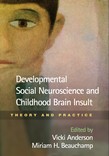
Synthesizing cutting-edge knowledge from multiple disciplines, this book explores the impact of acquired brain injury and developmental disabilities on children's emerging social skills. The editors present an innovative framework for understanding how brain processes interact with social development in both typically developing children and ......
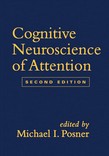
This authoritative reference provides a comprehensive examination of the nature and functions of attention and its relationship to broader cognitive processes. The editor and contributors are leading experts who review the breadth of current knowledge, including behavioral, neuroimaging, cellular, and genetic studies, as well as developmental and ......
This update to Peter R. Mouton's pioneering work provides bioscientists with the concepts needed in order to apply the principles and practices of unbiased stereology to research involving biological tissues.Mouton starts with a brief explanation of the history and theory of the process before defining the terms, concepts, and tools of unbiased ......
This update to Peter R. Mouton's pioneering work provides bioscientists with the concepts needed in order to apply the principles and practices of unbiased stereology to research involving biological tissues.Mouton starts with a brief explanation of the history and theory of the process before defining the terms, concepts, and tools of unbiased ......
The Best of Corwin series showcases key chapters from critically acclaimed Corwin publications for a powerful compilation of perspectives on important education issues and topics. Featuring the works of recognized pioneers in the nascent field of educational neuroscience, this cutting-edge collection shows how to apply current brain research to teaching and learning. The book is divided into three parts: The Developing Brain, The Brain in School, and Instructional Strategies for Every Brain. Chapter topics include: - Brain structures and development from birth through adolescence - What causes the brain to pay attention and remember - How the brain learns to read and calculate - Differences between the male and female brain - The social and academic needs of students with learning difficulties - Strategies for keeping students' brains engaged, focused, and energized Teachers are brain-changers, and knowing more about how the brain learns can only make you more successful at reaching and engaging young minds.
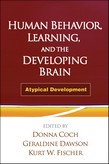
Examining brain-behavior relationships in a typically developing children, this volume integrates theories and data from multiple disciplines. It features full color illustrations. It is suitable for practitioners and researchers in developmental and cognitive neuroscience, neuropsychology, developmental psychology, and clinical psychology.
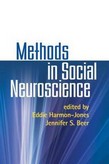
Offers guidance for using neurobiological methods in the study of human social behavior, personality, and affect. This book provides various chapters that cover neuroimaging techniques, genetic measurement, hormonal methods, lesion studies, facial electromyography, autonomic nervous system responses, and modeling based on neural networks.
Over the past 30 years, findings in the neurosciences have grown exponentially and have provided a profound understanding of the link between behavior and biology. Although the Social Work community has long taken pride in using a bio-psycho-social-spiritual (BPSS) framework in conceptualization and intervention, the biological aspect of this BPSS framework has been sorely missing. Neuroscience and Social Work Practice provides the critical missing link. Introducing the latest neuroscience research, it gives practitioners essential data-in an easily accessible form-with which to take on the challenges of increasingly complex human problems and diagnoses. Key Features Takes readers on a "tour of the brain" and makes dense scientific material more engaging Provides a framework for how human service professionals can understand and implement neuroscience clinical data with the use of the Transactional Model Uses case vignettes to explain how neuroscience findings have been applied to specific practice situations Offers a deeper understanding of the links between neuroscience research and social work in such areas as trauma, attachment, psychotherapy, substance abuse, and the effects of psychotropic medications Intended Audience This cutting-edge text is indispensable for practitioners in the human services field and is an essential supplement for upper-level undergraduate or graduate students of courses in Human Behavior in the Social Environment and Social Work Direct Practice as well as courses on Interpersonal Practice with Individuals, Children, and Families.