Physicists call the eternal, ubiquitous constancy of the laws of physics symmetry. Symmetry is the basic underlying principle that defines the laws of nature and hence controls the universe. This book explains the supremely elegant concept of symmetry and its profound ramifications to life on Earth and the universe at large.
Biologists study life in its various physical forms, while philosophers of biology seek answers to questions about the nature, purpose, and impact of this research. This edition contains material on design without selection, testing macroevolutionary claims, biotechnological issues, key ecological concerns, the Gaia hypothesis, and more.
Maintains that science can help us make wise choices and that an increase in scientific knowledge can help modify our ethical values and bring fresh ethical principles into social awareness. This book covers topics including bio-genetic engineering, stem cell research, organ transplants, human enhancement, abortion, euthanasia, and psychiatry.
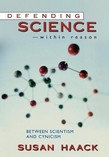
Illustrated with examples from the history of science, this book offers a different approach to familiar questions about scientific evidence and method tackles vital questions about science and its place in society. It argues that, fallible and flawed as they are, the natural sciences have been among the most successful of human enterprises.
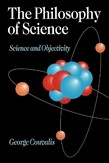
This textbook provides a non-technical introduction to the philosophy of science. Through asking whether science can provide us with objective knowledge of the world, the book provides a thorough and accessible guide to the key thinkers and debates that define the field. Couvalis surveys traditional themes around theory and observation, induction, ......
Presenting concepts of science, this title offers an analysis of the terminology of science - fact, law, proof, and theory - in relation to the colloquial meaning of these terms. It includes biographical vignettes of scientists showing their common commitment to the enterprise of science, together with backgrounds and personalities.
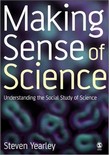
Science is at the heart of contemporary society and is therefore central to the social sciences. Yet science studies has often encountered resistance from social scientists. This book attempts to remedy this by giving the most extensive, thorough and best argued account of the field and explaining to social scientists why science matters to them. Making Sense of Science is a landmark book that demystifies science studies and successfully bridges the divide between social theory and the sociology of science. Illustrated with relevant, illuminating examples, it provides the ideal guide to science studies and social theory.
Illustrated with examples from the history of science, this work features an approach to familiar questions about scientific evidence and method and tackles important questions about science and its place in society.
Written in 1877 by an eminent physicist, this primer on physics provides a brief introduction to Newtonian mechanics for students and educated lay readers. Complete with many illustrations to clarify the concepts discussed in the text, it is suitable for history of science courses.