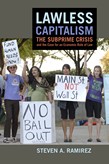
The Subprime Crisis and the Case for an Economic Rule of Law
Posits that the subprime mortgage crisis, as well as the global macroeconomic catastrophe it spawned, is traceable to a gross failure of law. This book ensures that economic opportunity isn't limited to a small group of elites that enjoy growth at the expense of many, particularly those in vulnerable economic situations.
A critical examination of the wrongdoing underlying the 2008 financial crisis An unprecedented breakdown in the rule of law occurred in the United States after the 2008 financial collapse. Bank of America, JPMorgan, Citigroup, Goldman Sachs, and other large banks settled securities fraud claims with the Securities and Exchange Commission for ......
Money Laundering in Ireland: Context, History and the Law focuses on the three key aims of anti-money laundering (AML) efforts: protecting legitimate businesses and financial systems from being exploited by criminals, criminalising money laundering, and seizing the proceeds of crime. With clear explanations setting out the current legislation and ......
The period between 1860 and 1920-inclusive of the Gilded Age and much of the Lochner era in legal history-is typically regarded as the heyday of conservative jurisprudence. According to this received wisdom, conservative judges and much of the legal profession were on the side of big business and the rich. Judges in this period subscribed to ......
Essential 6 page laminated quick reference to secured transactions, designed for students of law and those already practicing to see the significance of the details within the larger scheme of the law. Reviewers say this is a must-have for class as well as the Bar Exam with sub-parts being clear, concise and consolidated in a way that sheds light ......
This revised and updated edition discusses auditing and the law beyond the issue of third-party liability, and provides coverage of developments in audit methodologies and technologies. It also includes: a survey of developments in audit automation; a discussion of the nature and development of the audit market, both in the UK and the EU; and an assessment of the impact of the Cadbury report on corporate governance, with particular attention to the role of audit committees. Each chapter includes questions for discussion.
Edwin S. Rockefeller, drawing on 50 years experience with the antitrust laws, offers an explanation for their enduring irrationality. He questions whether any sense can be made of our antitrust statutes and their enforcement.