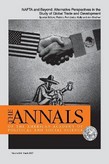
Alternative Perspectives in the Study of Global Trade and Development
As industrial globalization continues to surge, the impact of free trade on a global economy has remained one of the most debated topics in the sociopolitical arena. With the swelling popularity of the neo-liberal approach among economists and policy makers, it's crucial to keep the social, political, and environmental consequences of unrestricted trade at the forefront of the discussion. One of the most recent neo-liberal projects, the North American Free Trade Agreement (NAFTA), is an example of how the term free trade can bear distinct and contradictory meanings. Examining and clarifying the complex dimensions of NAFTA and its consequences sits at the core of this special issue of The Annals, which extends to offer in-depth analyses of specific countries and regions in Asia, Latin America, and Europe. Reflecting an interdisciplinary perspective from a group of distinguished scholars, the papers in this timely and thought-provoking issue are divided into three major sections: I. Political and Economic Dimensions of Free Trade Offering a bird's eye perspective on the global landscape, this first section provides readers with a solid framework to understand the concepts and applications of neo-liberal policies. II. NAFTA, Labor, and the Nation State Focusing on the relationship between labor and the state, these papers look at the causes and implications of economic globalization on economic inequality, civil society, and indigenous movements. III. Regionalization and Primary Goods Extraction What effects do neo-liberal projects have on agricultural, mining, and other primary resources? This final section reviews the environmental impact of a global economy. As the neo-liberalism approach continues to gain momentum, economists, sociologists, political scientists, and anthropologists must stay persistent in sustaining the debate over free trade tactics and their consequences. Providing an overall framework of the global landscape along with specific consequences of free trade, this issue of The Annals is a must-read for scholars and policy makers alike.
Me, Myself, My Team is a practical book stimulating the reader to new and empowering strategies using 'team' as a model for change. Whether the objective is to influence changes in your work-place, decide on the most career-important focus for your job or knowing how to understand and influence difficult people, this book has inspiring ......
The use of improvisation, jamming and the wisdom of rock music' as a model for creative thinking, leadership and change. FOR EVERYONE WISHING TO IMPROVE THEIR LEADERSHIP SKILLS At last, a book that cuts through the jargon of leadership and personal development. It offers a real world source of inspiration and provocation in areas such as: ......
Much of the twentieth century saw broad political support for public funding of American higher education. Liberals supported public investment because it encouraged social equity, conservatives because it promoted economic development. Recently, however, the politics of higher education have become more contentious. Conservatives advocate deep ......
In this fast-paced and lively account, Jim Lang asksand mostly answersthe questions that confront every new faculty member as well as those who dream of becoming new faculty members: Will my students like me? Will my teaching schedule allow me time to do research and write? Do I really want to spend the rest of my life in this profession? In ......
In this fast-paced and lively account, Jim Lang asksand mostly answersthe questions that confront every new faculty member as well as those who dream of becoming new faculty members: Will my students like me? Will my teaching schedule allow me time to do research and write? Do I really want to spend the rest of my life in this profession? In ......
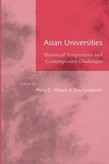
Historical Perspectives and Contemporary Challenges
Since 1980, higher education access and endorsement have grown more dramatically in Asia than in any other area of the world. Both developed and developing nations are witnessing rapid expansion in the higher education sector. Nor is this progress entirely quantitative: a number of Asian universities are on a par with the finest institutions of ......
Once rare, presidential transitions at institutions of higher education now command the attention of about one-quarter of the nation's colleges and universities at any given time. Though they occur frequently, transitions at this level are hardly routine, and American higher education has not developed a tradition of managing this process ......