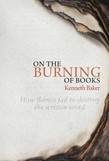
In On the Burning of Books, Baker explores famous moments throughout history when books have been burnt for political, religious, or personal reasons. Included among his investigations are stories from ancient China to the Nazis, from George Orwell’s Animal Farm to Salman Rushdie’s The Satanic Verses, from Chairman ......
Our special report looks at freedoms to study and research around the world, with reports from Turkey, South Africa and China, along with new fiction from Turkmenistan, plus poetry from Angola and the UK.
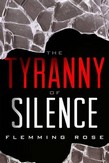
When the Danish newspaper Jyllands-Posten (Viby, Denmark) published the cartoons of the prophet Mohammed nine years ago, Denmark found itself at the center of a global battle about the freedom of speech. The paper's culture editor, Flemming Rose, defended the decision to print the 12 drawings, and he quickly came to play a central part in the ......
In this issue of Index on Censorship magazine, authors from around the world including the former Observer literary editor Robert McCrum, and Oxford University's Stuart White consider what clauses they would draft into a 21st century version of the Magna Carta; from Mexico a review of its constitution and its flawed justice system; Turkish novelist Kaya Genc looks at the recent intimidation against Turkish female writers and Natasha Joseph reports from Johannesburg on allegations of witchcraft in South Africa, and how people take action into their own hands. With reports from the Ukraine and Russia on the information and propaganda war, and plus new poetry and a previously unpublished play extract.
A collaboration between an attorney and an animal protection advocate, this work utilises the extremely controversial and high-profile "crush video" case, US v. Stevens, to explore how American society attempts to balance the protection of free speech and the prevention of animal cruelty. Starting from the detailed case study of a single prominent ......
The issue's special report looks at religion and freedom of expression as well as religious offence. When is the right to religious freedom suppressed or censored? Where do we draw the line between offence and faith and how should society respond? It looks at persecution of religions around the world, including the Bishop of Bradford Nicholas Baines's account of Christians in Sudan, analysis of China's Uighur Muslim minority community; Islamist challenges to free speech in Turkey; Felix Corley on Uzbekistan, where owning religious texts can get you into trouble; the new law on offence to religious feelings introduced in Russia in July 2013; and clashes between church and state in South Africa. The issue also looks at religious offence and art with Martin Rowson, Samira Ahmed and an interview with playwright Gurpreet Kaur Bhatti to mark the10-year anniversary of the Behzti affair. The issue also publishes, for the first time in English, an extract from Lebanese playwright Lucien Borjely's banned play.
The rapid emergence of a multipolar world and the growing political and economic importance of a range of powers including China, India, Brazil and South Africa is increasingly having a significant impact on support for, and repression of, free expression. Many key international issues, from human rights to climate change and free trade, are no longer dominated either by one particular world view or split simply between two rival powers. While China and Russia remain at the repressive end of the spectrum, how widely free speech is defended internationally depends increasingly on the positions of countries like India and Brazil as much as on the values and practices of the US and Europe. In all these democracies, free speech is still in the ascendant but with too many examples of excessive constraints from internet surveillance and takedown requests to criminalisation of offensive speech.
From Tunisia to China, activists and journalists are using technology to get vital news out and bring about change. As the battle to control information continues - from government surveillance and online blocking to big business to hacktivists and protesters - Index looks at the key players in the fight for digital freedom. With Rebecca MacKinnon & Ethan Zuckerman: Tools for the future Jennifer Granick: Damage control Gabriella Coleman: Beacons of freedom Eric King: Trade secrets Ahmed Mansoor: free expression in Dubai Milton Mueller: Revolution in crisis Heather Bond: Ushahidi and crowd wisdom Pranesh Prakash: India's internet jam Hu Yong: microblogging in China Alex McGillivray on Twitter Frontline SMS: Anchor to the world. PLUS Fault lines: religion, culture and censorship with Edna Fernandes, Svetlana Mintcheva and Brad Adams AND Fiction from Roma Tearne and Jamal Ali's modern fable.
Should sport be above politics and human rights? As London gets ready for the Olympics, Index on Censorship visits the ethical pit stops, asks whether sporting tournaments can be good for democracy and considers the appeal of championships to sports mad dictators - from Vladimir Putin to Alexander Lukashenko. With Mihir Bose giving the inside track on sport and ethics, Natalie Haynes Corinna Ferguson on new threats to the right to protest in the UK, Stephen Escritt and Martin Polley on brand control, Arnold van Bruggen and Rob Hornstra on Russia's winter challenge, and Leah Borromeo on what the Olympics mean for locals. Plus award-winning Syrian cartoonist Ali Ferzat, Salil Tripathi on censorship at literary festivals and reports on press freedom from Hungary, Dagestan and Mexico. Index on Censorship is an award-winning magazine, devoted to protecting and promoting free expression. International in outlook, outspoken in comment, Index on Censorship reports on free expression violations around the world, publishes banned writing and shines a light on vital free expression issues through original, challenging and intelligent commentary and analysis, publishing some of the world's finest writers. Winner 2008 Amnesty International Consumer Magazine of the Year