The argument here is that, although Indonesia would appear to be the natural leader in Southeast Asia, it has been singularly unsuccessful in putting its stamp on ASEAN. If anything, ASEAN has been put on Indonesia's bebas dan aktif (independent and active) foreign policy stamp through Indonesia's deference to self-constructed obligations to ASEAN ......
Wealth and Power and the International Corporate Agenda
Dr.Mentan's study goes beyond the dichotomies of globalisation. He notes that certain dualities recur in the literature on this subject. In one widely influential distinction, there are two primary forces at work in the rise of globalisation: globalisation from above, a process that primarily affects the elites within and across national contexts, ......
During the 13th ASEAN Summit in November 2007, ASEAN Leaders endorsed the ASEAN Economic Community (AEC) Blueprint, which laid the foundation of creating a ""single market and production base"" among the ten Southeast Asian economies. Soon after that, ASEAN faced great uncertainties in the light of the 2008 global financial crisis and continues to ......
In this concise introduction to international law, students gain a clear appreciation for how politics shapes the development of international law, and how international law shapes political relations between states. Throughout the book, Rochester takes this complex subject and makes it accessible with his vibrant, easy-to-read prose. After exploring the parameters of international law-its intrinsic challenges and the various approaches to it-Rochester then examines its five major sectors- the law of the sea, airspace, and outer space; human rights; war and peace; states and markets; and the environment-all through the lens of international relations theory. Students will appreciate numerous pedagogical features, such as instructive case studies, photos and cartoons, discussion questions, and-new to this edition-an "International Law in Action" box, which uses real-world cases to flesh out the inner workings of international law. Based on reviewer feedback, the author reorganized several chapters, bringing coverage of jurisdiction to the forefront in order to better set the stage for subsequent chapters. With updates to all of the book's data, factual information, and hundreds of endnotes, Rochester presents the latest IL scholarship in a clear and straightforward manner.
Sovereign nations share the international system with a host of non-state transnational actors. Some of these entities have been created by states themselves, often as a result of the need to jointly solve a common problem, such as the United Nations. Other international entities are created when members of a society organize across traditional national boundaries to deal with a collective concern, such as Amnesty International or Oxfam. To understand and explain contemporary world politics we need to consider these institutions, as key actors influencing issues of war and peace. Although transnational actors are not new on the world stage, the number and type of these international entities expanded dramatically after World War II. This set examines both the rise of these new transnational actors and their effect on international politics and policies. Volume One: Causes - Why Do International Institutions Exist? Volume Two: Consequences - When, Where and Why International Institutions are Effective Volume Three: Types of Institutions - Security and Economic Volume Four: Types of Institutions - Environment, Human Rights, International Courts, Multilateralism, Regionalism
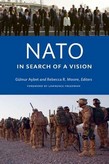
NATO has to articulate a strategic vision designed to determine how, when, and where its capabilities should be used, the values underpinning its missions, and its relationship to other international actors such as the European Union and the United Nations. This work examines the key issues that NATO must address in formulating a strategic vision.
The role of law in world politics has become a major part of the study of international relations in the last fifteen years. This six-volume set brings together in a single source articles that reflect the spectrum of theoretical and empirical work on International Law in the social sciences. Together they address the central questions about the necessity, development and role of International Law: - How do international norms and rules about behavior develop? - Do they influence important aspects of interactions among states and other entities? - How do they condition international politics? Part 1: Approaches to the Study of International Law History and Background, Realism and International Law: Constructivist and Normative Approaches: Legalization and Judicialization: Part 2: International Law and International Relations: The Conceptual Terrain Sovereignty,International and Domestic Settings Institutional Design,Compliance, Adjudication Democracies and International Law Part 3: Issue Areas Economic and Property Rights Cooperation Security, Use of Force, and the Laws of War Human Rights, Humanitarian Intervention and War Crimes
This report shares results of a region wide survey undertaken in late 2007 among over 2,000 students from leading universities across ASEAN member countries. The survey addressed questions on whether youths today consider themselves to be citizens of ASEAN; whether the region's youth are enthusiastic or skeptical about ASEAN; how well the region's ......
"Know Your ASEAN" sets down, in clear and simple language, the basic facts about the Association of Southeast Asian Nations. It does so in the form of 40 questions and their answers. It is among the contributions of the Institute of Southeast Asian Studies to the observance of the 40th anniversary of ASEAN's founding on 8 August 1967.The booklet ......