"A tool box overflowing with ideas that will help every staff developer craft a school culture hospitable to adult and student learning." -Roland S. Barth, Author, Lessons Learned "The book speaks to many audiences, including instructional coaches, PLC leaders, action researchers and group leaders, and university professors working with action researchers and PLCs." -Gail Ritchie, Coleader, Teacher Researcher Network Fairfax County Public Schools, VA "A terrific resource for connecting teacher networks and action research to create powerful professional development opportunities. This book is a joy to read." -Ellen Meyers, Senior Vice President Teachers Network Powerful tools for facilitating teachers' professional development and optimizing school improvement efforts! Professional learning communities (PLCs) and action research are popular and proven frameworks for professional development. While both can greatly improve teaching and learning, few resources have combined the two practices into one coherent approach. The Reflective Educator's Guide to Professional Development provides educators with strategies, activities, and tools to develop inquiry-oriented PLCs. Nationally known school reform experts Nancy Fichtman Dana and Diane Yendol-Hoppey cover the ten essential elements of a healthy PLC, provide case studies of actual inquiry-based PLCs, and present lessons learned to help good coaches become great coaches. With this step-by-step guide, readers will be able to: Organize, assess, and maintain high-functioning, inquiry-oriented PLCs Facilitate the development of study questions Establish the trust and collective commitment necessary for successful action research Enable PLC members to develop, analyze, and share research results Lead successful renewal and reform efforts By combining two powerful training practices, coaches, workshop leaders, and staff developers can ensure continuous, robust school-based professional development.
"A tool box overflowing with ideas that will help every staff developer craft a school culture hospitable to adult and student learning." -Roland S. Barth, Author, Lessons Learned "The book speaks to many audiences, including instructional coaches, PLC leaders, action researchers and group leaders, and university professors working with action researchers and PLCs." -Gail Ritchie, Coleader, Teacher Researcher Network Fairfax County Public Schools, VA "A terrific resource for connecting teacher networks and action research to create powerful professional development opportunities. This book is a joy to read." -Ellen Meyers, Senior Vice President Teachers Network Powerful tools for facilitating teachers' professional development and optimizing school improvement efforts! Professional learning communities (PLCs) and action research are popular and proven frameworks for professional development. While both can greatly improve teaching and learning, few resources have combined the two practices into one coherent approach. The Reflective Educator's Guide to Professional Development provides educators with strategies, activities, and tools to develop inquiry-oriented PLCs. Nationally known school reform experts Nancy Fichtman Dana and Diane Yendol-Hoppey cover the ten essential elements of a healthy PLC, provide case studies of actual inquiry-based PLCs, and present lessons learned to help good coaches become great coaches. With this step-by-step guide, readers will be able to: Organize, assess, and maintain high-functioning, inquiry-oriented PLCs Facilitate the development of study questions Establish the trust and collective commitment necessary for successful action research Enable PLC members to develop, analyze, and share research results Lead successful renewal and reform efforts By combining two powerful training practices, coaches, workshop leaders, and staff developers can ensure continuous, robust school-based professional development.
Are you: A woman wanting to return to work after a break? A woman seeking to improve career prospects through education or training? An adviser providing education or training or an employer keen to develop your awareness of the opportunities available to women? If you are any of these you need the Eighth Edition of Returning to Work: a directory of education and training for women. Compiled by the Women Returners' Network, this unique directory of education and training for women has been completely revised. It provides information on over 1,700 courses across the UK which offer opportunities and facilities that enable women returners to participate in, for example: shortened-day timetables to fit in with school hours; hands-on experience with information technology equipment; job-sampling experience; the opportunity to assess abilities, discover new interests, widen horizons and develop confidence; and guidance and counselling sessions. Returning to Work also gives vital information on: how to find out what education and training is available; key national training providers; eligibility for mandatory grants and details of awards and sponsorship schemes; national organizations offering further support for women returning to education or training or employment; and local contact points for further information and advice in county or region.
`This book offers an insight into the structure and delivery of careers education, discusses the meaning and impact of vocational guidance, and provides a political and historical context. It is thorough and well researched, and will be of interest to those delivering, researching and participating in careers education and guidance' - Careers Guidance Today `This book is an important contribution to a discourse in which there have been too few voices' - British Journal of Guidance & Counselling Careers Education takes a critical look at policy and practice in the context of the new role of the privatized Careers, Education and Guidance Service. Suzy Harris places the present situation within the context of subordination to market principles; delineates the changing and uncertain relationship between schools and the Careers Service; shows how the politics of curriculum relevance marginalizes careers teaching; describes the downward path to complete exclusion from The National Curriculum and points the way for policymakers to eschew rhetoric and rebuild the Careers Service This book will be an essential resource to help careers and guidance practitioners make sense of their situation, for students and researchers seeking to understand current policy, and inform policy- making. `Essential for teachers doing courses in careers education and guidance' - Tony Watts, NICEC
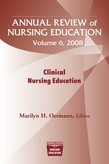
Addresses various trends, developments, and innovations in nursing education. This book provides information and ideas that educators and administrators can use in their nursing programs. It takes a look at such intriguing topics as innovations in clinical teaching and evaluation, partnerships for clinical teaching, and selecting clinical sites.
Seminars by Professor Windy Dryden. See the man live and in action. To find out more and to book your place go to www.cityminds.com ________________________________________ `It is a fairly well established clich[ac]e that while supervision is recognised as a crucial component of good practice in psychotherapy and counselling, there is correspondingly little written about it... [this book is] a good step in redressing the balance... It is a practical, didactic and generic view of how to do supervision... giving a fairly comprehensive account of 30 of the formal skills that all supervisors probably use whether consciously or not... The book discusses each of the skills, giving examples as well as practical suggestions as to how to approach difficult issues... directed principally at counsellors, it is a book to dip into when faced with a panic about a specific issue' - Therapeutic Communities Supervision is a professional and ethical necessity for all counsellors, providing them with consultative and supportive aid while protecting clients from potential abuse - yet relatively little has been written on the subject. This volume aims to redress that balance. Encouraging, yet sensitive to the difficult issues that frequently arise in supervision, the book contains practical suggestions, plus useful appendices, to help practising and trainee supervisors develop and enhance the skills they need to be successful in their work. The authors cover such key areas as creating a supervisory alliance, fostering the supervisory relationship, the use of tape-recording, highlighting supervisees' strengths and weaknesses, and protecting the client and counsellor.
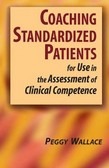
Intended as a support for those who are involved in training Standardized Patients, from the art of coaching through preparing SP's for the physical exam, to encourage each coach to develop a system that will deliver the best results and, in the end, help train the most competent doctors.
`This book offers an insight into the structure and delivery of careers education, discusses the meaning and impact of vocational guidance, and provides a political and historical context. It is thorough and well researched, and will be of interest to those delivering, researching and participating in careers education and guidance' - Careers Guidance Today `This book is an important contribution to a discourse in which there have been too few voices' - British Journal of Guidance & Counselling Careers Education takes a critical look at policy and practice in the context of the new role of the privatized Careers, Education and Guidance Service. Suzy Harris places the present situation within the context of subordination to market principles; delineates the changing and uncertain relationship between schools and the Careers Service; shows how the politics of curriculum relevance marginalizes careers teaching; describes the downward path to complete exclusion from The National Curriculum and points the way for policymakers to eschew rhetoric and rebuild the Careers Service This book will be an essential resource to help careers and guidance practitioners make sense of their situation, for students and researchers seeking to understand current policy, and inform policy- making. `Essential for teachers doing courses in careers education and guidance' - Tony Watts, NICEC
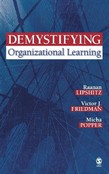
This book presents a solid, research-based conceptual framework that demystifies organizational learning and bridges the gap between theory and practice. Using an integrative approach, authors Raanan Lipshitz, Victor Friedman and Micha Popper provide practitioners and researchers with tools for understanding organizational learning under real-world conditions. Key Features: Tackles the problem of mystification: A clear message is presented that organizational learning and related concepts have been mystified in a way that is unnecessary and dysfunctional to both theory and practice. This book provides a unique set of tools for understanding, promoting, and studying organizational learning. Introduces an integrative theme that addresses three key questions: How can organizations actually learn? What is the key for productive organizational learning? When is productive organizational learning likely to occur? Answering these questions is the key to clarifying the conceptual confusion that plagues the related fields of organizational learning, learning organizations, and knowledge management. Illuminates organizational reality: All of the concepts presented in the book are illustrated through concrete case examples. Detailed analyses are provided of both successful and unsuccessful applications of organizational learning. In addition, examples of interventions to develop organizational learning are included to help managers and consultants. Intended Audience: This book is designed for advanced undergraduate and graduate courses such as Organizational Learning, Knowledge Management, and Organizational Behavior in the departments of Management, Organizational Behavior, Psychology, and Sociology.