Drawing on the contributions of 75 leading authors in the field, this 2010 Edition of the respected Handbook of Adult and Continuing Education provides adult education scholars, programme administrators, and teachers with a solid foundation for understanding the current guiding beliefs, practices, and tensions faced in the field, as well as a basis for developing and refining their own approaches to their work and scholarship. Offering expanded discussions in the areas of social justice, technology, and the global dimensions of adult and continuing education, the Handbook continues the tradition of previous volumes with discussions of contemporary theories, current forms and contexts of practice, and core processes and functions. Insightful chapters examine adult and continuing education as it relates to gender and sexuality, race, our aging society, class and place, and disability.
Communication is a key theme of the QTLS Standards. This accessible book helps readers to understand the theories and principles that underpin effective communication and apply this theory to improve their communication with learners, colleagues and others in professional life. It examines the environment of educational settings and looks at how individuals themselves communicate with the sector. It gives detailed advice on communication skills and promoting a supporting learning environment. It goes on to include notes on communicating for specific teaching situations, inclusion and working with colleagues. Finally, it covers resources for communication and their adaptation for different situations.
'Delivering Employability Skills' is an optional unit of the teacher training qualifications. This easy-to-read and accessible text is aimed at trainees undertaking this unit, or existing teachers wishing to refresh their understanding of delivering employability skills as part of CPD. With practical activities and examples throughout, this book supports delivery of the subject in a variety of settings. Please note: the qualification unit content contained in the appendices has since changed, and some legislation mentioned in the book has been updated.
This book provides clear guidance on how to approach initial teaching experience, how to plan effective sessions, how to work well with your mentor and how to make the most out of your new career. Through focusing on the real-life experiences of both in-service and pre-service trainee teachers, it offers the opportunity to reflect on and learn from an array of diverse teaching practice experiences from a wide range of vocational areas including construction, hair and beauty, Early Years, psychology, performing arts, law, English, Skills for Life and engineering.
"Eleanor Drago-Severson takes hold of an important and neglected truth: students grow best in schools where the adults around them are growing, too. In this nurturing and much-anticipated work, the author shows us exactly how to make this happen. Sound theory, vivid examples, and, best of all, a practice-ready framework-it's all here! Anyone who cares about making our schools better will feel richly rewarded for spending time with this encouraging book." -Robert Kegan, Meehan Professor of Adult Learning and Professional Development Harvard University Graduate School of Education Coauthor of Immunity to Change "With this comprehensive and compelling book, Eleanor Drago-Severson establishes herself as a leading authority on authoritative leadership in education." -Howard Gardner, Author of Leading Minds Support the growth and development of all adults-teachers, principals, and superintendents-in your school community! Educators at every level go through different stages of development over the course of their lives and need different kinds of supports and challenges to grow. Leading Adult Learning introduces a model of adult development that helps school and district leaders consciously cultivate teacher, principal, and superintendent capacities in the educational workplace. Eleanor Drago-Severson's developmental model of learning-oriented school leadership draws from multiple knowledge domains, including adult learning, developmental theory, leadership practice, and organizational collaboration. The book shows school leaders how to foster growth and learning for individuals with different needs and developmental orientations. With a focus on research and application, this volume: Details four Pillar Practices for growth-teaming, providing leadership roles, collegial inquiry, and mentoring-which can support all adults Presents extensive research and practical application from principals, teachers, superintendents, and other school leaders from across the nation Includes application exercises, reflective questions, and lessons from the field to assist you in applying this learning-oriented model to your school and school system Drago-Severson makes a compelling case for deliberately supporting adult development within and across school systems to enhance adults' capacities, school improvement, and student achievement.
'Eleanor Drago-Severson takes hold of an important and neglected truth: students grow best in schools where the adults around them are growing, too. In this nurturing and much-anticipated work, the author shows us exactly how to make this happen. Sound theory, vivid examples, and, best of all, a practice-ready framework-it's all here! Anyone who cares about making our schools better will feel richly rewarded for spending time with this encouraging book' - Robert Kegan, Meehan Professor of Adult Learning and Professional Development Harvard University Graduate School of Education, Coauthor of Immunity to Change 'With this comprehensive and compelling book, Eleanor Drago-Severson establishes herself as a leading authority on authoritative leadership in education' - Howard Gardner, Author of Leading Minds Support the growth and development of all adults-teachers, principals, and superintendents-in your school community! Educators at every level go through different stages of development over the course of their lives and need different kinds of supports and challenges to grow. Leading Adult Learning introduces a model of adult development that helps school and district leaders consciously cultivate teacher, head teacher, and education officer capacities in the educational workplace. Eleanor Drago-Severson's developmental model of learning-oriented school leadership draws from multiple knowledge domains, including adult learning, developmental theory, leadership practice, and organizational collaboration. The book shows head teachers how to foster growth and learning for individuals with different needs and developmental orientations. With a focus on research and application, this volume: - Details four Pillar Practices for growth-teaming, providing leadership roles, collegial inquiry, and mentoring-which can support all adults - Presents extensive research and practical application from head teachers, teachers, Education Officers, and other school leaders from across the nation - Includes application exercises, reflective questions, and lessons from the field to assist you in applying this learning-oriented model to your school and school system Drago-Severson makes a compelling case for deliberately supporting adult development within and across school systems to enhance adults' capacities, school improvement, and student achievement.
This new edition (previously entitled "Teaching Using Information and Learning Technology in Further Education") is an up to date resource for trainee and qualified teachers within the Lifelong Learning Sector. Focusing on information and learning technology as a toolkit for resourceful teachers, it includes reflective activities, teaching strategies and teaching tips throughout, along with ideas for applying these to the reader's own context. In this new edition, all material has been fully updated to reflect the latest changes in technology and its applications, and each chapter in the book is referenced to the new LLUK Standards.
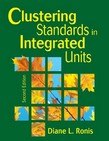
"This book provides a wealth of information for teachers who are seeking new ways to meet the needs of all learners for high academic achievement!" -Marguerita K. DeSander, Assistant Professor of Leadership and Policy Studies The George Washington University "Using this book as part of the alignment process will greatly enhance any classroom curriculum!" -Joen M. Painter, Education Consultant Develop integrated, meaningful units that engage students and address multiple standards! Using a student-oriented approach, Clustering Standards in Integrated Units, Second Edition, offers guidelines for designing interdisciplinary units that combine content areas, address standards, and involve students in their own learning and assessment. Diane L. Ronis offers a framework for organizing, implementing, and evaluating units and provides sample rubrics, templates, and reproducibles for the planning process. Drawing on a constructivist approach and geared to meet students' individual learning needs, the text demonstrates how to: Integrate content across multiple curriculum areas Make instruction meaningful using new information about how the brain works Encourage students to pose and investigate questions relevant to the real world Access specific Web sites for meeting state standards This book helps seasoned and novice teachers facilitate collaborative learning with teams of students and assist them in making significant connections between their own experiences and events in the real world.
Clustering Standards in Integrated Units presents frameworks and other instruments to aid both seasoned and novice teacher professionals in designing interdisciplinary instruction by: Developing learning activities that are aligned with instructional goals and standards Selecting appropriate instructional materials and resources that spark interest and facilitate individual connections to promote meaning and understanding Evaluating student performance using an instrument that recognizes students' varied approaches to learning, knowledge bases, and cultural and language backgrounds while maintaining high expectations for all. The book offers sample rubrics, templates, strategies for organizing a unit, and blackline masters for each of the planning instruments discussed. Educators will learn to: Plan and implement units that integrate content across multiple curriculum areas Make instruction meaningful through the use of new information learned about the brain Develop interdisciplinary lesson plans