'This is a well written, thought provoking, and highly challenging book for anyone who claims to be a criminologist or for whom crime is of central concern. It should be required reading on all undergraduate and post-graduate criminology courses. A truly innovative take on some well established criminological dilemmas.' - Sandra Walklate, Eleanor Rathbone Chair of Sociology, University of Liverpool What makes people commit crime? Psychosocial Criminology demonstrates how a psychosocial approach can illuminate the causes of particular crimes, challenging readers to re-think the similarities and differences between themselves and those involved in crime. The book critiques existing psychological and sociological theories before outlining a more adequate understanding of the criminal offender. It sheds new light on a series of crimes - rape, serial murder, racial harassment , 'jack-rolling' (mugging of drunks), domestic violence - and contemporary criminological issues such as fear of crime, cognitive-behavioural interventions and restorative justice. Gadd and Jefferson bring together theories about identity, subjectivity and gender to provide the first comprehensive account of their psychoanalytically inspired approach. For each topic, the theoretical perspective is supported by individual case studies, which are designed to facilitate the understanding of theory and to demonstrate its application to a variety of criminological topics. This important and lucid book is written primarily for upper level undergraduates, postgraduates and teachers of criminology. It is particularly useful for students undertaking a joint degree in criminology and psychology. It will also appeal to critical psychologists, psychoanalysts, students of biographical methods and those pursuing social work training. David Gadd is Senior Lecturer in Criminology at Keele University. Tony Jefferson is Professor of Criminology at Keele University.
'This is a well written, thought provoking, and highly challenging book for anyone who claims to be a criminologist or for whom crime is of central concern. It should be required reading on all undergraduate and post-graduate criminology courses. A truly innovative take on some well established criminological dilemmas.' - Sandra Walklate, Eleanor Rathbone Chair of Sociology, University of Liverpool What makes people commit crime? Psychosocial Criminology demonstrates how a psychosocial approach can illuminate the causes of particular crimes, challenging readers to re-think the similarities and differences between themselves and those involved in crime. The book critiques existing psychological and sociological theories before outlining a more adequate understanding of the criminal offender. It sheds new light on a series of crimes - rape, serial murder, racial harassment , 'jack-rolling' (mugging of drunks), domestic violence - and contemporary criminological issues such as fear of crime, cognitive-behavioural interventions and restorative justice. Gadd and Jefferson bring together theories about identity, subjectivity and gender to provide the first comprehensive account of their psychoanalytically inspired approach. For each topic, the theoretical perspective is supported by individual case studies, which are designed to facilitate the understanding of theory and to demonstrate its application to a variety of criminological topics. This important and lucid book is written primarily for upper level undergraduates, postgraduates and teachers of criminology. It is particularly useful for students undertaking a joint degree in criminology and psychology. It will also appeal to critical psychologists, psychoanalysts, students of biographical methods and those pursuing social work training. David Gadd is Senior Lecturer in Criminology at Keele University. Tony Jefferson is Professor of Criminology at Keele University.
Explores ethical dilemmas forensic psychologists may encounter in procedures, including referrals, evaluations, documentation of findings and opinions, and testimony and termination. The authors present a practical ethical-decision making model to demonstrate how to approach ethical challenges; they also offer suggestions for addressing potential ......
Child witnesses pose unique challenges to the legal system, and courtrooms are daunting and alien to children. Timely and truly international in scope, this volume focuses on the techniques and procedures used to accommodate child witnesses in legal systems - and on research investigating the effectiveness and implications of those techniques - around the world: England, Scotland, The Netherlands, Israel, South Africa, Hong Kong, Australia, Canada, New Zealand, the United States and India. Featuring the work of renowned scholars from the international psycholegal community, the volume not only provides support for all countries seeking to broaden their approach to child psychology and law, but also promotes justice in those countries where child protection is virtually unknown.
This work deals with substance abuse among the incarcerated criminal population as well as the street criminal in a criminogenic neighborhood or setting. It is designed to be used by criminal justice professionals particularly those in corrections and intervention programs. Law enforcement program managers will also be able to develop programs ......
Psychological, Social, and Legal Considerations in Forensic Examinations
Provides psychologists with information for conducting an evidence-based forensic consultation. The authors acquaint readers with the clinical and social scientific literature on sexual harassment, and apply these findings to issues that psychologists must consider in preparing ethically sound and well-substantiated forensic reports and testimony.
Discusses the hot area of forensic psychology -- the crossroads of law and psychology -- and illustrates how personality-guided assessment is a useful tool in the multiple arenas in which forensic psychologists are active: child custody evaluation, fitness for duty evaluations, personal injury, domestic violence, and many others.
Psychosocial Roots, Consequences and Interventions
An analysis of the psychosocial basis of terrorism, offering theory and interventions for understanding, intervening and preventing this challenge to international security. It includes strategies to eliminate the conditions that give rise to terrorism as well as ways to treat terrorism's victims.
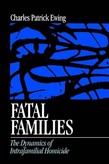
Fatal Families examines the nature, causes a nd consequences of family homicide in modern American societ y. Using a case study approach, the author explores the soci al, cultural and psychological forces that lead to the famil y homicide. '