'In this pathbreaking volume Muncie and Goldson bring together leading authors to examine and compare youth justice systems around the world. Comparative Youth Justice will be of interest to all criminologists concerned with comparative penal policy and will be essential to all scholars of youth justice' - Professor Tim Newburn, London School of Economics and Political Science and President of the British Society of Criminology 'Comparative Youth Justice is what we need in an era of hardening social policies and irresponsible political demagoguery: thoughtful critiques, comparative analysis, and a commitment to the rights of youth. John Muncie and Barry Goldson have done a fine job of bringing together a group of commentators who know the inner workings of juvenile justice and what it will take to change the current law and order model. A book that is required reading for practitioners, professors, policy makers, researchers, and students concerned about the bankrupt state of juvenile justice and willing to consider new ideas and directions' - Tony Platt, California State University, Sacramento With contributions from leading commentators from 13 different countries, this carefully integrated edited collection comprises the most authoritive comparative analysis of international youth justice currently available. However, Comparative Youth Justice is not simply an attempt to document national similarities and differences, but looks critically at how global trends are translated at the local level. This book also examines how youth justice is implemented in practice with a view to promoting change as well as reflection. Each chapter addresses key critical issues: - the degree of compliance with international law; - the extent of repenalistion; - adulteration; - tolerance; - the impact of experiments in restoration and risk management. This book is designed as a companion volume to Youth Crime and Justice, edited by Barry Goldson and John Muncie, published simultaneously by SAGE Publications. 'This is a brilliant set of edited volumes that will be an indispensable and timely source of information and analysis for anyone with an interest in issues of youth justice and comparative criminology.' David A. Green, Oxford University
This dynamic new youth-focused exploration of criminal justice combines thoughtful commentary with selections from actual federal and state constitutional criminal law cases. The book addresses tough, important issues that are part of many high school curriculums and directly affect today's young people. This is an essential new resource for students and teachers at the high school or undergraduate level, as well as public or subject-specific libraries that offer information on criminal justice.
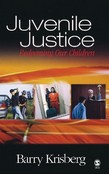
Juvenile justice policies have historically been built on a foundation of myths and misconceptions. Fear of young, drug-addled superpredators, concerns about immigrants and gangs, claims of gender biases, and race hostilities have influenced the public's views and, consequently, the evolution of juvenile justice. These myths have repeatedly ......
Juvenile justice policies have historically been built on a foundation of myths and misconceptions. Fear of young, drug-addled superpredators, concerns about immigrants and gangs, claims of gender biases, and race hostilities have influenced the public's views and, consequently, the evolution of juvenile justice. These myths have repeatedly ......
This is a practical, common-sense guide offering long term solutions to juvenile crime through a proven programme. The work draws on extensive research and succesful practice with teenage repeat offenders.'
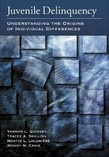
Understanding the Origins of Individual Differences
The authors have integrated empirical and conceptual advances in evolutionary psychology, behavioural genetics and developmental psychology - three fields of enquiry which have experienced great successes in explaining human behaviour in general and antisocial behaviour in particular.
From boot camps to truancy, the Encyclopedia of Juvenile Justice provides more than 200 up-to-date, concise, and readable entries in a single, authoritative volume. The editors, noted authors of several criminal justice books and editors of the award-winning Encyclopedia of Prisons (Garland, 1997), cover historical and contemporary theories, ......
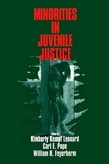
Providing current information on the disparate treatment of minority youth within the juvenile justice system, this volume begins by identifying the need for a better understanding of how minority youths experience this system. The book then draws on research programmes that reflect different techniques of investigation, sampling and analysis with several racial minority groups. Topics include: juvenile encounters with police; the role of community structure in shaping the perceptions of juvenile crime and the response to it; and the treatment of Native American youths in juvenile justice. In conclusion the book outlines strategies for research and observation of over-representation of minorities as well as steps to help overcome racial bias in juvenile justice processing.