Using real case studies from New York where GIS have been at the centre of a successful programme, the contributors to this study present methods of combining geographic information systems and application software with strategies to reduce crime.'
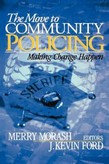
Community policing continues to be of great interest to policy makers, scholars and, of course, local police agencies. Successfully achieving the transformation from a traditional policing model to community policing can be difficult. This book aims to illuminate the path to make that change as easy as possible. Morash and Ford have produced a ......
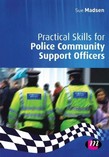
The role of the Police Community Support Officer (PCSO) is increasingly demanding and challenging, requiring constant learning and application of practical skills. This book is written as a practical guide for prospective or newly-recruited PCSOs, as well as established officers who want to refresh and develop their knowledge. Linked throughout to the National Occupational Standards, this book introduces the key, universal areas of competency for PCSOs and guides the reader through incidents typical of those PCSOs will encounter. Throughout, these scenarios are addressed with up-to-date policing methods, relevant procedure and legislation.
This is the first course guide that has been developed for students of policing. It identifies the core themes and additional source material, providing an essential overview for students and a reference point for use throughout their studies. The Policing Course Companion is designed to complement and work alongside existing literature. It provides: " Easy access to the key themes in policing " Helpful summaries of the approach taken by the main course textbooks " Guidance on the essential study skills required to pass the course " Help with developing critical thinking " Taking it Further sections that suggest how readers can extent their thinking beyond the "received wisdom" " Pointers to success in course exams and written assessment exercises The SAGE Course Companion in Policing is much more than a revision guide for undergraduates; it is an essential tool that will help readers take their course understanding to new levels and help them achieve success in their undergraduate course. John Grieve is a former Director of Intelligence for the Metropolitan Police, where he also held a number of other senior roles. He is now Chair of the John Grieve Centre for Policing and Community Safety and Emeritus Professor at London Metropolitan University. Clive Harfield is a former police Inspector and is now the Deputy Director of the John Grieve Centre for Policing and Community Safety, London Metropolitan University. Allyson MacVean is Founder and Director of the John Grieve Centre for Policing and Community Safety, London Metropolitan University.
The Initial Police Learning and Development Programme (IPLDP) is structured around National Occupational Standards (NOS), against which new officers will be trained and assessed. This book, written by police officers, introduces student officers to the key competency areas and elementary skills required. It introduces the key policing skills and guides the reader through typical scenarios, addressing issues in the context of modern policing, and of the relevant professional competencies and occupational standards. This latest edition has been expanded with chapters on the core policing skills, and includes references to the NOS.
This is the first course guide that has been developed for students of policing. It identifies the core themes and additional source material, providing an essential overview for students and a reference point for use throughout their studies. The Policing Course Companion is designed to complement and work alongside existing literature. It provides: " Easy access to the key themes in policing " Helpful summaries of the approach taken by the main course textbooks " Guidance on the essential study skills required to pass the course " Help with developing critical thinking " Taking it Further sections that suggest how readers can extent their thinking beyond the "received wisdom" " Pointers to success in course exams and written assessment exercises The SAGE Course Companion in Policing is much more than a revision guide for undergraduates; it is an essential tool that will help readers take their course understanding to new levels and help them achieve success in their undergraduate course. John Grieve is a former Director of Intelligence for the Metropolitan Police, where he also held a number of other senior roles. He is now Chair of the John Grieve Centre for Policing and Community Safety and Emeritus Professor at London Metropolitan University. Clive Harfield is a former police Inspector and is now the Deputy Director of the John Grieve Centre for Policing and Community Safety, London Metropolitan University. Allyson MacVean is Founder and Director of the John Grieve Centre for Policing and Community Safety, London Metropolitan University.
Although there is a plethora of studies on crime and punishment, law enforcement is a relatively new field of serious research. When courts, sentencing, prisons, jails, and other areas of the criminal justice system are studied, often the first point of entry into the system is through police and law enforcement agencies. Unfortunately, ......
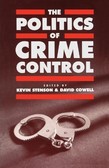
This book brings together a group of leading international criminologists from all sides of the political spectrum. In the first part they examine the formation and implementation of official crime prevention and control policies, while in the second they look at a range of critical perspectives which explore the definition of crime and discuss proposals for its prevention and control.
Police misconduct is a topic of great concern worldwide. However, the causes of police corruption are remarkably different. Understanding the unique political, historical, legal, and economic institutions of a country is essential in identifying the potential for police misconduct. Police misconduct is a topic of great concern worldwide. However, ......