In this timely contribution to the debates on citizenship, Elizabeth Meehan provides an incisive analysis of the meaning of citizenship, and the links between civil, political and social citizenship. The book provides a clear account of the development of social rights within the European community in three key areas: social security and assistance; participation by workers in the undertakings in which they are employed; and the equal treatment of men and women. The author critically assesses the extent to which inequalities of class, gender and ethnicity are successfully addressed by community social policies.
As ever-increasing numbers of children live apart from their parents, how can policymakers and professionals who work with families address the emotional and financial needs of such children? The editors draw on research, policy and practice sources in order to identify a rich array of roles that nonresidential parents may play in the lives of their children. They also explore such issues as: variation in nonresidential parenting across ethnic groups; the financial implications of parenting separately; patterns of involvement of nonresidential parents; and implications for further research and social policy.
As ever-increasing numbers of children live apart from their parents, how can policymakers and professionals who work with families address the emotional and financial needs of such children? The editors draw on research, policy and practice sources in order to identify a rich array of roles that nonresidential parents may play in the lives of their children. They also explore such issues as: variation in nonresidential parenting across ethnic groups; the financial implications of parenting separately; patterns of involvement of nonresidential parents; and implications for further research and social policy.
A host of misconceptions about single parenting are explored in this volume. Topics examined include the interface between the family and the external environment, transitional stages in the life of the family and support from the extended family. Attention is also paid to special categories of families: families of ethnic minorities, father-headed families, adolescent parents and non-custodial parenting.
Are there effective ways to support a family with problems (for example, neglect, abuse, HIV, terminal illness) in order to prevent it breaking up, and make a positive change possible? This book examines Intensive Family Preservation Services, tracing the history of these services, their success at solving family problems, how families respond to the services and how their effectiveness varies according to the type of problem a family is experiencing. Through an exploration of these issues, the contributors offer their own experience as a basis for tracing the evolution of IFPS and the advances that have been made in the field.
More effective prevention, diagnosis, treatment and rehabilitation will be the outcome of including the family unit in the delivery of primary care, as opposed to primary care aimed solely at individuals. This is the proposal explored by this volume's interdisciplinary contributors, who discuss theory, practice, education and research methodology related to primary care.
More effective prevention, diagnosis, treatment and rehabilitation will be the outcome of including the family unit in the delivery of primary care, as opposed to primary care aimed solely at individuals. This is the proposal explored by this volume's interdisciplinary contributors, who discuss theory, practice, education and research methodology related to primary care.
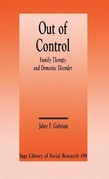
Counselling techniques that can help families regain control and causes of families breaking up are among the topics explored in this ethnographic account of therapeutic sessions. Two very different views of what a family is and how it becomes `out of control' emerge, resulting in vastly different therapeutic approaches. Gubrium compares two family counselling facilities - a community outpatient centre and a private family-focused psychiatric hospital - which have radically different concepts of the family. One setting examines a family's system including hidden structures, power relations, language and interaction as clues to the family's dysfunction. The other is concerned with affective relationships and deep emotions, hoping to use these bonds to connect members of troubled families.