Families today are changing in response to shifts in the broader environment: dual-career couples, single-parent families, racially mixed families, now represent the norm rather than the exception. A group of leading family researchers examine current social changes and their impact on family relationsips and family functioning. As an overview of the present state of and future directions for families, this book should be required reading for family researchers, practitioners and students.
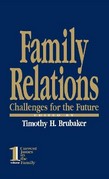
Families today are changing in response to shifts in the broader environment: dual-career couples, single-parent families, racially mixed families, now represent the norm rather than the exception. A group of leading family researchers examine current social changes and their impact on family relationsips and family functioning. As an overview of the present state of and future directions for families, this book should be required reading for family researchers, practitioners and students.
If individuals cannot adequately be understood without reference to the family system, families themselves are comprehensible only in a broader social context. FAMILIES AND LARGER SYSTEMS is the first single-author book on families and larger systems designed specifically for the practicing therapist. It offers rich descriptions of the ......
Exploring the connections between family policies, individual and family well-being and political culture, this volume examines several research projects and concludes that their results challenge the view that governmental social programmes in the United States have been detrimental to family life. The results also clarify the relationship between states' political cultures and the kinds of family policies enacted. Additionally, Zimmerman provides guidelines to aid the development of a policy agenda designed to enhance the well-being of individuals and families - regardless of where they live.
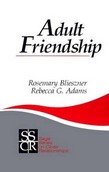
A topic relevant to everyone - friendship - is explored in this volume, the first in the SAGE Series on Close Relationships. It presents a thoughtful statement about what we know, and have yet to learn, concerning adults' friendships. The authors discuss state-of-the-art research on the interplay between social structure, individual disposition and dynamic processes of friendship, and findings on both similarities and differences across adult lifecourse stages. They provide a theoretical framework, incorporating both sociological and psychological perspectives. Using this framework, they offer a new and integrative model of friendship to synthesize research, identify gaps in the literature, scrutinize methods used and produce a map for future research.
The late eighteenth century marked a period of changing expectations about marriage. The difficulties that rose, including abuse, and domestic violence differ little from those with which couples struggle today. This account reveals a strongly communicative world in which neighbors came to the aid of those locked in unhappy marriages.
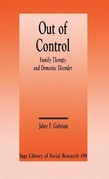
Counselling techniques that can help families regain control and causes of families breaking up are among the topics explored in this ethnographic account of therapeutic sessions. Two very different views of what a family is and how it becomes `out of control' emerge, resulting in vastly different therapeutic approaches. Gubrium compares two family counselling facilities - a community outpatient centre and a private family-focused psychiatric hospital - which have radically different concepts of the family. One setting examines a family's system including hidden structures, power relations, language and interaction as clues to the family's dysfunction. The other is concerned with affective relationships and deep emotions, hoping to use these bonds to connect members of troubled families.
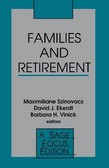
The individual nature of the transition from being a member of the workforce to being retired has been the focus of previous books on retirement. In contrast, this book explores the impact of retirement upon family relationships and functioning. Among the topics examined are: gender and ethnic differences; the roles of children and siblings; and the multiple changes retirement creates in marital interaction. The contributors also discuss various theoretical models, analyses of research and methodological problems associated with studying families with retired members, and present new data on these issues.
The individual nature of the transition from being a member of the workforce to being retired has been the focus of previous books on retirement. In contrast, this book explores the impact of retirement upon family relationships and functioning. Among the topics examined are: gender and ethnic differences; the roles of children and siblings; and the multiple changes retirement creates in marital interaction. The contributors also discuss various theoretical models, analyses of research and methodological problems associated with studying families with retired members, and present new data on these issues.