Chemical Dependency Counseling: A Practical Guide offers a comprehensive, step-by-step introduction to addiction treatment grounded in twelve-step principles and evidence-based practice.
A Cultural History of Alcoholics Anonymous 1935-1960
Alcoholics Anonymous (AA) was founded in 1935. A great deal has been written about the addiction program and its membership, but little scholarship has been done on how it reflected the culture of the 1930s and Great Depression. Kevin Kaufmann's Rigorous Honesty investigates what AA can tell us about America in the 1930s. It begins by examining ......
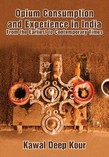
Opium Consumption and Experience in India offers a "cultural biography" of opium in the subcontinent. It spans the Raj and India after independence. The book examines the "social lives" of opium in India, beginning as a commodity in the sixteenth century to its social transformation and singularization in the eighteenth century, and its decline ......
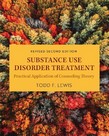
Substance Use Disorder Treatment: Practical Application of Counseling Theory examines substance use disorder counseling through the lens of major counseling theories. It provides descriptions of counseling theory in action and demonstrates the application of various theories in real-world contexts. Part I of the text reviews essential information ......
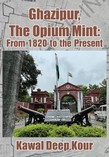
The Opium Factory of Ghazipur has a history all its own. Like most other colonial enterprises, it was developed to further colonial mercantile and imperial interests. Ghazipore, as it was known in British India, was the headquarters of the Benaras opium agency, which included almost the whole of the then-United Provinces. Directed and driven by ......
The Alcohol and Drug-Abuse Client Workbook is an evidence-based program that uses treatments including motivational enhancement, cognitive-behavioral therapy, skills training, medication, and 12-step facilitation.
Luca’s life is perfect; he has a loving mother, a father he idolizes and a strong bond with his twin sister. But by 15, life as he knows it, is over. He sits in juvenile detention, responsible for the deaths of two people, his family destroyed...
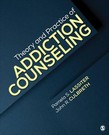
This one-of-a-kind text brings together contemporary theories of addiction and helps readers connect those theories to practice using a common multicultural case study. Theories covered include motivational interviewing, moral theory, developmental theory, cognitive behavioral theories, attachment theory, and sociological theory. Each chapter focuses on a single theory, describing its basic tenets, philosophical underpinnings, key concepts, and strengths and weaknesses. Each chapter also shows how practitioners using the theory would respond to a common case study, giving readers the opportunity to compare how the different theoretical approaches are applied to client situations. A final chapter discusses approaches to relapse prevention.
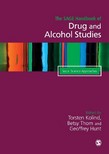
The use of substances across the world has been increasing in the last 25 years, coupled with a rising political focus on both illegal and legal drug use. Split into two volumes to give a complete overview, this landmark publication maps out the debate on drugs and alcohol. Volume one investigates social science theory on the subject and volume two addresses biological approaches. Topics covered range from anthropology and neo-colonialism to toxicology and screening. The chapters are interdisciplinary in scope, and draw on perspectives including from sociology, criminology, healthcare, social care, neurology, psychology, pharmacology and economics. It is valuable reading for students, researchers, academics and professionals working in this area.