Winner of the American Psychological Association's Award for Distinguished Contribution to Psychology and the Media "Thought-provoking."--New Orleans Times-Picayune. "Comprehensive, well-researched."--Ottawa Citizen. "A massive five-year ...study of the effects of television on American society. It's a study worth more than a 45-second spot on the ......
Mass Communication and the Disruption of Social Order
Intended for academics and students in media studies and political science, the authors of this book explore through a number of different contexts the way in which crises highlight the problematic issues of media performance in democratic states. They examine the relationship between communication and civil society through a number of actual cases of media responses to "crises", ranging from the Gulf War of 1991 to recent events in Eastern Europe. Individual examples of crises emphasize the complexities of understanding the role of the media in struggles of identity around nationality, ethnicity, and gender.
This important collection presents a comparative synthesis of what works and what does not in mass media health campaigns. High priority is given to coverage of substance abuse prevention campaigns, but programmes on AIDS, smoking, teenage pregnancy, heart disease, Alzheimer's Disease and vehicle seat belt use are also reviewed. Designing Health Communication Campaigns deepens our understanding of how to design, implement and evaluate mass media campaigns by highlighting the contributions of media experts who add a human element to the various campaign experiences they describe.
The phrase `production of culture' is concerned with how the organizations in which culture is produced and disseminated affect the nature of culture itself. Yet there is no clear consensus on what is meant by this phrase. Crane, in reviewing and synthesizing current research, provides a systematic and accessible approach to this complex subject. She examines the issue on both popular and elite levels. The reader is thus allowed to see how the notion of `production' changes depending on the size of the audience and the structure of the particular cultural industry.
Substantially updated, this revised edition of Why Viewers Watch presents recent research, overlooked past studies and fresh survey data to offer an alternative perspective on the role of television and how it serves its viewers psychologically. Fowles argues that television is a `grandly therapeutic force' - a tension-reliever of great benefit to viewers. He also examines the phenomenon of media snobbery - anti-television attitudes proliferated by those who want to feel superior to others by denigrating television viewing.
This is a print on demand book and is therefore non- returnable. The authors offer an insightful analysis of the symbiotic relationship between the popular entertainment industry and America's youth, suggest principles for evaluating popular art and entertainment, and propose strategies for rebuilding strong local cultures in the face of global ......
Publishing Articles on American and English Language and Literature, Criticism and Theory, Film, American Studies, Poetry and Fiction
The Fifth Directory of Periodicals is expressly organized for scholars in the humanities who are looking for appropriate places to submit manuscripts for publication. The Fourth Directory, published by Donna Gerstenberger and George Hendrick in 1974, provided access to a large selection of periodicals, but it has been out of print for some time. ......
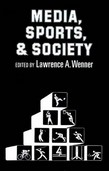
Although the American obsession with mediated sports has grown tremendously in the past few years, there is little scholarly inquiry focused on how the mediated sports culture has developed and how we respond to it. Framed by a seminal article outlining the parameters of the communication of sports and pointing to major issues that need to be addressed in the relationship between sports and media, "Media, Sports and Society" provides a foundation for research on the communication of sports. Contributors examine the theoretical, cultural and historical issues, the production of mediated sports programming, its content and its audience. Individual chapters include a discussion of the spectacle of mediated sports, a comparison of Super Bowl Football and the World Cup Soccer, a consideration of the spectators' enjoyment of sports violence, the rhetoric of winning and the American dream, and a fascinating examination of gender harmony and sports interests.
Written in a clear and engaging style, Super Media introduces and examines the newly emerging cultural studies approach to understanding media. Michael Real begins by providing a critical review of previous traditions of media research and theory -- illustrated with tables and comparative charts -- and re-integrates media study around cultural studies. He argues that issues of personal identity and consciousness, of conflict and bias, of politics and policy, are more effectively articulated and understood through cultural studies. Drawing from both humanities and the social sciences, he centers his analyses in text, meaning, representation, interpretation, conflict, ideology, hegemony and culture. Extensive case studies flesh out these theories and concepts by exploring lively and familiar examples of media, including the Olympics, Hollywood films, superpower politics and transnational television programs.