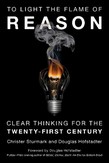
To Light the Flame of Reason is all about the art of clear thinking, an art that is needed now more than ever in the world we now live in. Written for anyone who wants to navigate better in this world filled with populist dogmas, anti-science attitudes, and pseudo-philosophy
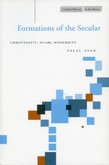
Opening with the provocative query "what might an anthropology of the secular look like?" this work explores the concepts, practices, and political formations of secularism, with emphasis on the major historical shifts that have shaped secular sensibilities in the modern West and Middle East. It proceeds to dismantle commonly held assumptions ......
Expanding on a concept from New York Times bestseller The God Delusion, former ordained minister and current atheist Dan Barker gives us a biblical play-by-play illustrating God's not-so-admirable qualities.
How should we speak of humanism today? To answer this question, Moroccan philosopher Ali Benmakhlouf turns to Montaigne. Through a rich and attentive reading of Montaigne's Essays, Benmakhlouf reminds us why the sixteenth-century author remains relevant today when the need to recognize the "humanity of others"-from the cry of "Black Lives Matter" ......
An analysis of the growing visibility of nonreligion in Egypt. Egypt's 2011 Uprising, while often perceived as a failed revolution, nonetheless nonetheless had durable social effects. Among these has been a rise in expressing atheism and agnosticism, especially among educated and affluent youth-the country's future leaders. An intimate ......
Edwin H. Wilson and the American Humanist Association
Sometimes called America's fourth religion, religious humanism emerged in the Midwest as a product of Enlightenment rationality, the Social Gospel, and the philosophy of pragmatism. John S. Haller Jr. examines religious humanism's first fifty years alongside Edwin H. Wilson's pivotal role in the American Humanist Association (AHA). Started ......
Edwin H. Wilson and the American Humanist Association
Sometimes called America's fourth religion, religious humanism emerged in the Midwest as a product of Enlightenment rationality, the Social Gospel, and the philosophy of pragmatism. John S. Haller Jr. examines religious humanism's first fifty years alongside Edwin H. Wilson's pivotal role in the American Humanist Association (AHA). Started by a ......
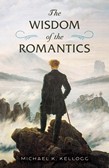
The post-Enlightenment movement known as Romanticism is a messy period; so messy, in fact, that many scholars eschew any attempt to define it. In reaction to the overreliance placed on reason by Enlightenment thinkers, Romantics emphasized individual freedom, emotional intensity, introspection, sincerity, and heightened imagination. They sought ......
A comprehensive account of the concept of woman in Western thought, from ancient Greece, through the Middle Ages, to today In her sweeping, three-volume study, Sister Prudence Allen examined how women and men have been defined in relation to one another scientifically, philosophically, and theologically. Now synthesized for students, The ......