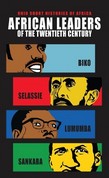
This omnibus edition brings together concise and up-to-date biographies of Steve Biko, Emperor Haile Selassie, Patrice Lumumba, and Thomas Sankara. African Leaders of the Twentieth Century will complement courses in history and political science and serve as a useful collection for the general reader. Steve Biko, by Lindy Wilson Steve Biko ......
During the Renaissance and the Enlightenment, coloniality emerged as a new structure of power as Europeans colonized the Americas and built on the ideas of Western civilization and modernity as the endpoints of historical time and Europe as the center of the world. Walter D. Mignolo argues that coloniality is the darker side of Western modernity, ......
An outstanding contribution to our understanding of postcolonial theory and its engagement with significant changes within the contemporary world. Couze Venn forces us to rethink the very parameters of the post-colonial and suggests a new political economy for post-modern times. This critical engagement opens up the possibility to reimagine the world from its current narrow European strictures to a world full of alternative possibilities and modernities... This is a timely and ground breaking book that contributes to a much needed reconceptualisation of the postcolony. - Professor Pal Ahluwalia, Goldsmiths, University of London What is postcolonial studies? What are its achievements, strengths and weaknesses? This ground breaking book offers an essential guide to one of the most important issues of our time, with special emphasis on neo-liberalism within world poverty and the 'third world'. It clarifies: The territory of postcolonial studies How identity and postcolonialism relate The ties between postcolonialism and modernity New perspectives in the light of recent geo-political events Potential future developments in the subject.
An outstanding contribution to our understanding of postcolonial theory and its engagement with significant changes within the contemporary world. Couze Venn forces us to rethink the very parameters of the post-colonial and suggests a new political economy for post-modern times. This critical engagement opens up the possibility to reimagine the world from its current narrow European strictures to a world full of alternative possibilities and modernities... This is a timely and ground breaking book that contributes to a much needed reconceptualisation of the postcolony. - Professor Pal Ahluwalia, Goldsmiths, University of London What is postcolonial studies? What are its achievements, strengths and weaknesses? This ground breaking book offers an essential guide to one of the most important issues of our time, with special emphasis on neo-liberalism within world poverty and the 'third world'. It clarifies: The territory of postcolonial studies How identity and postcolonialism relate The ties between postcolonialism and modernity New perspectives in the light of recent geo-political events Potential future developments in the subject.
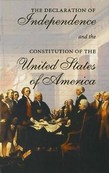
In 1787, "We the people" were the three words that not only engendered a new and cohesive nation; they went on to change the face of the world as well. This book prefaces the volume with a succinct history and interpretation of the place and meaning of both the Declaration and the Constitution in American life.
This title describes the brutal impact of capitalism and colonialism on both the colonizer and the colonized, exposing the contradictions and hypocrisy implicit in western notions of progress and civilization.
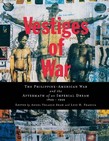
The Philippine-American War and the Aftermath of an Imperial Dream 1899-1999
Examines the official American nationalist story of benevolent assimilation and fraternal tutelage in its half century of colonial occupation of the Philippines. This title recounts the consequences of American colonialism in the Philippines.
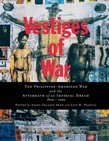
The Philippine-American War and the Aftermath of an Imperial Dream 1899-1999
Examines the official American nationalist story of benevolent assimilation and fraternal tutelage in its half century of colonial occupation of the Philippines. This book shows the consequences of American colonialism in the Philippines.
The partition of India into two countries, India and Pakistan, caused one of the most massive human convulsions in history. Within the space of two months in 1947 more than twelve million people were displaced. A million died. More than seventy-five thousand women were abducted and raped. Countless children disappeared. Homes, villages, ......