This is the first comprehensive and up-to-date history of Byzantium to appear in almost sixty years, and the first ever to cover both the Byzantine state and Byzantine society. It begins in a.d. 285, when the emperor Diocletian separated what became Byzantium from the western Roman Empire, and ends in 1461, when the last Byzantine outposts fell to ......
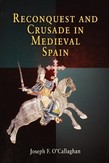
Drawing from both Christian and Islamic sources, Reconquest and Crusade in Medieval Spain demonstrates that the clash of arms between Christians and Muslims in the Iberian peninsula that began in the early eighth century was transformed into a crusade by the papacy during the twelfth and thirteenth centuries. Successive popes accorded to Christian ......
The most important illuminating source that survived from the two centuries termed "the dark ages of Byzantium" is the chronicle of the monk Theophanes (d. 817 or 818). In it Theophanes paints a vivid picture of the Empire's struggle in the seventh and eighth centuries both to withstand foreign invasions and to quell internal religious conflicts. ......
History of the Lombards, by Paul the Deacon (c. 720-c. 799), is among the most important and oldest accounts of the Germanic nation. The book preserves many ancient myths and popular traditions and draws from sources that are now lost. The history traces the changing fortunes of the Lombards, the last of the migratory Germanic peoples to enter the ......
Intellectual Exchange in the Ottoman Empire and Renaissance Europe
Between 1450 and 1550, a remarkable century of intellectual exchange developed across the Eastern Mediterranean. As Renaissance Europe depended on knowledge from the Ottoman Empire, and the courts of Mehmed the Conqueror and Bayezid II greatly benefitted from knowledge coming out of Europe, merchants of knowledge-multilingual and transregional ......
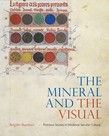
Examines the social roles, cultural meanings, and active agency of precious stones in jeweled crowns, illustrated lapidaries, and illustrated travel accounts in the European Middle Ages.
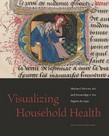
Medieval Women, Art, and Knowledge in the Regime du corps
Early modern central Africa comes to life in an extraordinary atlas of vivid watercolors and drawings that Italian Capuchin Franciscans, veterans of Kongo and Angola missions, composed between 1650 and 1750 for the training of future missionaries. These "practical guides" present the intricacies of the natural, social, and religious environment of ......
First discovered in a Hungarian library in 1838, the Rohonc Codex keeps privileged company with some of the most famous unsolved writing systems in the world, notably the Voynich manuscript, the Phaistos Disk, and Linear A. Written entirely in cipher, this 400-year-old, 450-page-long, richly illustrated manuscript initially gained considerable ......
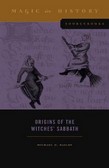
Explores the western European idea of the witches' sabbath, based on translations of five texts dating from the 1430s, and examines how these texts went on to influence conceptions of diabolical witchcraft for centuries to come.