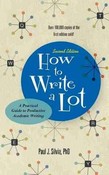
In this second edition of his guidebook, Paul Silvia offers fresh advice to help you overcome barriers to writing and use your time more productively. After addressing some common excuses and bad habits, he provides practical strategies to motivate students, professors, researchers, and other academics to become better and more prolific writers.
The ultimate answer for parents and teachers struggling to motivate children to practise their reading and writing skills. This collection of 40 play-based literacy activities, suitable for indoor and outdoor environments and children with learning difficulties, makes literacy so much fun that your child will forget that they're working.
Help kindergarten students improve their writing skills with fun and effective daily practice activities. Guides students through the five steps of the writing process: prewriting, drafting, revising, editing, and publishing with fun daily activities.
Help third grade students improve their writing skills with fun and effective daily practice activities. Guides students through the five steps of the writing process: prewriting, drafting, revising, editing, and publishing with fun daily activities.
Help first grade students improve their writing skills with fun and effective daily practice activities. Guides students through the five steps of the writing process: prewriting, drafting, revising, editing, and publishing with fun daily activities.
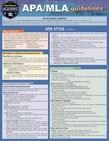
Quick reference guide to the essentials of two of the most highly used writing style guides for college-level students. The most frequently used elements of the 7th edition of the American Psychological Association's publication manual are combined with elements of the 9th edition of the Modern Language Association's rules of punctuation, ......
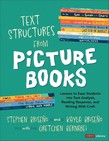
Lessons to Ease Students Into Text Analysis, Reading Response, and Writing With Craft
Teach students the architecture beneath a successful story-and boost their reading comprehension and writing skills for a lifetime Writing instruction can sometimes seem scattershot, as teachers try to cover a galaxy of craft techniques, ideas, intentions, and genres. The possibilities are endless-and that's the problem. In Text Structures from Picture Books, elementary and middle grade teachers tap into a well-ordered universe of inspiring and illustrative stories to help students frame their thinking and focus choices. Using the bite-size format of picture books as a starting point, the authors share 50 low-prep, quick-access lessons to help you teach students seven concrete ways to respond to text in any genre. Through these lessons, students will be able to: Generate their own writing, using a text structure harvested from the work of professional authors Retell a story, using the text structure from the story Generate reading responses, using structures that support clarity Analyze a story to construct thematic statements, capturing the author's message and bigger themes Write about a theme or big idea demonstrating empathic and evidence-based interpretation Answer open-ended questions by selecting a technique that reflects the text and their engagement Experiment with author's craft in their own writing Based on master writing teacher Gretchen Bernabei's instructional model, the lessons offer a lively, high-impact mix of reading aloud, discussion, modeling, student writing, and peer share. Plus, readers have access to a complete companion website full of text structure reproducibles, reading response prompts, additional lessons and extensions, students samples, and links to demo videos. State tests are now assessing reading and writing together. And that's a good thing-but we've got some catching up to do. Written for students beginning in second grade, Text Structures from Picture Books will help your students swiftly and surely become text-savvy readers and writers.
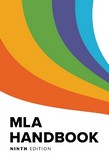
Teaching and learning MLA style is about to get easier. For nearly seventy years, the Modern Language Association has helped student writers choose trustworthy sources and use them to support their own ideas. Now, the authority on writing and research presents the clearest approach to MLA style yet with the ninth edition of the MLA Handbook. The ......
Help second grade students improve their writing skills with fun and effective daily practice activities. Guides students through the five steps of the writing process: prewriting, drafting, revising, editing, and publishing with fun daily activities.