The Diary, Letters, and Memorabilia of an 88th Infantry Officer
A memoir within a memoir, A German Texan in World War II: The Diary, Letters, and Memorabilia of an 88th Infantry Officer tells the story of Robert Lee Melcher, written by his daughter, Marilyn Melcher Maddox. Melcher served as a major in the US Army from 1943 to 1945 in North Africa and Italy, leaving the war decorated with a Bronze Star Medal ......
Emory Upton (1839-1881) is widely recognized as one of America's most influential military thinkers. His works-The Armies of Asia and Europe and The Military Policy of the United States-fueled the army's intellectual ferment in the late nineteenth century and guided Secretary of War Elihu Root's reforms in the early 1900s. Yet as David J. ......
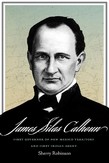
First Governor of New Mexico Territory and First Indian Agent
Veteran journalist and author Sherry Robinson presents readers with the first full biography of New Mexico's first territorial governor, James Silas Calhoun. Robinson explores Calhoun's early life in Georgia and his military service in the Mexican War and how they led him west. Through exhaustive research Robinson shares Calhoun's story of ......
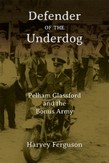
In 1932, the worst year of the Great Depression, more than twenty thousand mostly homeless World War I veterans trekked to the nation's capital to petition Congress to grant them early payment of a promised bonus. The Hoover Administration and the local government urged Washington, DC, police chief Pelham Glassford to forcefully drive this "bonus ......
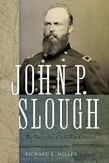
John Potts Slough, the Union commander at the Battle of Glorieta Pass, lived a life of relentless pursuit for success that entangled him in the turbulent events of mid-nineteenth-century America. As a politician, Slough fought abolitionists in the Ohio legislature and during Kansas Territory's fourth and final constitutional convention. He ......
By now the world knows well the exploits of World War II admirals Ernest King, Chester Nimitz, and "Bull" Halsey. These brilliant strategists and combat commanders--backed by a powerful Allied coalition, a nation united, gifted civilian leaders, and abundant war-making resources--led U.S. and allied naval forces to victory against the Axis powers. ......
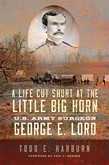
Of the three physicians at the Battle of the Little Big Horn, Doctor George Edwin Lord (1846-76) was the lone commissioned medical officer, an assistant surgeon with the United States Army's 7th Cavalry-one more soldier caught up in the U.S. government's efforts to fulfill what many people believed was the young country's "Manifest Destiny." A ......
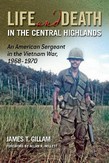
An American Sergeant in the Vietnam War, 1968-1970
Featured in The Vietnam War PBS series by Ken Burns & Lynn Novick In 1968 James T. Gillam was a poorly focused college student at Ohio University who was dismissed and then drafted into the Army. Unlike most African-Americans who entered the Army then, he became a Sergeant and an instructor at the Fort McClellan Alabama School of Infantry. In ......
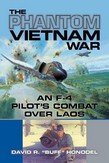
David R. "Buff" Honodel was a cocky young man with an inflated self-image when he arrived in 1969 at his base in Udorn, Thailand. His war was not in Vietnam; it was a secret one in the skies of a neighboring country almost unknown in America, attacking the Ho Chi Minh Trail that fed soldiers and supplies from North Vietnam into the South. ......