Twentieth-Century science discoverd that the physical world is profoundly relational---that, thanks to the phenomenon of quantum entanglement, there is a holistic connectivity at the deepest level of physical reality. This new way of comprehending the universe---which brings to mind the mystery at the heart of Trinitarian theology---has inspired ......
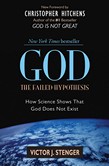
Treating the traditional God concept, as conventionally presented in the Judeo-Christian and Islamic traditions, like any other scientific hypothesis, this title examines the claims made for Gods existence. It considers the Intelligent Design arguments as evidence of Gods influence in biology.
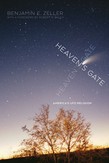
In March 1997, thirty-nine people in Rancho Santa Fe, California, ritually terminated their lives. To outsiders, it was a mass suicide. To insiders, it was a graduation. The author explores the question of why the members of Heaven's Gate committed ritual suicides, and examines the origin and evolution of the religion, its appeal, and practices.
How does the Christian doctrine of creation square with the picture of an evolving universe we receive from science today? How do the badly predatory behavior and wasteful extinction of whole species fit in with a Christian understanding? These and a host of related questions raised by ordinary experience are tackled in this important and ......
Is it possible for human beings to have authentic relationships with an AI? How does the increasing presence of AI change the way humans relate to one another? In pursuing answers to these questions, Herzfeld explores what it means to be created in the image of God and to create AI in our own image.
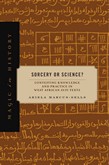
Contesting Knowledge and Practice in West African Sufi Texts
Examines the works of two Sufi Muslim scholars, Sidi al-Mukhtar al-Kunti (d. 1811) and his son Sidi Muhammad (d. 1826), focusing on their cosmology and metaphysics of the realm of the unseen, in relation to the history of magical discourses within the Hellenistic and Arabo-Islamic worlds.
What Neuroscience Reveals about the Compulsion to Believe
Does neuroscience have anything to say about religious belief or the existence of God? Some have tried to answer this question, but, in doing so, most have strayed from the scientific method. In The Phantom God, computational biologist and neuroscientist John C. Wathey, Ph.D., tackles this problem head-on, exploring religious feelings not as ......
What did pain and illness mean to early Christians? And how did their approaches to health care compare to those of the ancient Greco-Roman world? In this wide-ranging interdisciplinary study, Helen Rhee examines how early Christians viewed illness, pain, and health care and how their perspective was influenced both by Judeo-Christian tradition ......