More Frequently Asked Questions about the Ancient Greeks and Romans
Could a Roman bridge carry a modern freight train? How much would it cost to build the Colosseum today? What if the Romans had grown potatoes?
In a series of fast-paced essays, Leaky Aqueducts, Battle Pigeons, and Mystery Cults answers questions that historian Garrett Ryan has been asked in the classroom ......
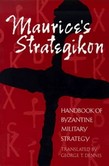
As a veteran campaigner, the Byzantine emperor Maurice (582-602) compiled a unique and influential handbook intended for the field commander. In this first complete English translation, the Strategikon is an invaluable source not only for early Byzantine history but for the general history of the art of war. Describing in detail weaponry and ......
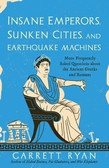
More Frequently Asked Questions about the Ancient Greeks and Romans
In a series of short and humorous essays, Insane Emperors, Sunken Cities, and Earthquake Machines features more answers to questions that ancient historian Garrett Ryan is frequently asked in the classroom, in online forums, and on his popular YouTube channel Told in Stone.
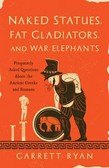
Frequently Asked Questions About the Ancient Greeks and Romans
Why didn't the ancient Greeks or Romans wear pants? How did they shave? How likely were they to drink fine wine, use birth control, or survive surgery? In a series of short and humorous essays, Naked Statues, Fat Gladiators, and War Elephants explores some of the questions about the Greeks and Romans that ancient historian Garrett Ryan has ......
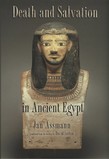
"Human beings," the acclaimed Egyptologist Jan Assmann writes, "are the animals that have to live with the knowledge of their death, and culture is the world they create so they can live with that knowledge." In his new book, Assmann explores images of death and of death rites in ancient Egypt to provide startling new insights into the particular ......
The first volume of Donald Kagan's acclaimed four-volume history of the Peloponnesian War offers a new evaluation of the origins and causes of the conflict, based on evidence produced by modern scholarship and on a careful reconsideration of the ancient texts. He focuses his study on the question: Was the war inevitable, or could it have been ......
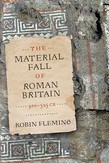
Although lowland Britain in 300 CE had been as Roman as any province in the empire, in the generations on either side of 400, urban life, the money economy, and the functioning state collapsed. Many of the most quotidian and fundamental elements of Roman-style material culture ceased to be manufactured. Skills related to iron and copper smelting, ......
The second of three story collections from the writer of the acclaimed Bony crime novels, with 45 stories from the author's tramping around Australia, dealing with camels and station hands, and his experience in WW1 at Gallipoli and the Middle East. Full of fantastic characters only found in the great Australian bush.
The Roots of "Spiritual But Not Religious" in Antiquity
The first volume of Michael Horton's magisterial intellectual history of "spiritual but not religious" as a phenomenon in Western culture Discussions of the rapidly increasing number of people identifying as "spiritual but not religious" tend to focus on the past century. But the SBNR phenomenon and the values that underlie it may be older ......