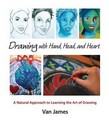
Drawing with Hand, Head, and Heart is a comprehensive and practical guide to the art of drawing and to the process of visual thinking that is part of our full human intelligence. More than 500 illustrated exercises and examples - collected and developed over many years of Waldorf classroom experience - show teachers, parents, and students how to ......
In recent years, the rise of research-creation-a scholarly activity that considers art practices as research methods in their own right-has emerged from the organic convergences of the arts and interdisciplinary humanities, and it has been fostered by universities wishing to enhance their public profiles. In How to Make Art at the End of the World ......
Contributions to a Methodical Schooling in Colour Experience
'What is postulated here is not the dogmatic laying down of a way of working. Rather the aim is to make evident one possible means of access to an experience of the colour world... and guide actual practice to Rudolf Steiner's sketch motifs - to their eminent educational power - for we recognize in them a path that can become of great significance ......
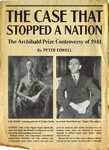
In 1944 a battle in the art world was knocking World War II off front pages. Angry and disappointed contestant, Mary Edwards, launched a Supreme Court attack on famous innovator, William Dobell, and the judges who gave him the Archibald Prize—world’s richest portrait prize.
Margaret Preston's 92 Aphorisms have only appeared in a rare limited edition Recent Paintings 1929. This compilation offers the original design, the aphorisms and ten Preston woodcuts.
Leonardo da Vinci (1452-1519) accomplished many astounding works of art such as "Mona Lisa" and "The Last Supper". Featuring anatomical drawings, geometrical illustrations, as well as life of Leonardo, this book aims to serve as a primer for students interested in learning the craft of drawing and painting.
This book analyzes contemporary visual art produced in the context of conflict and trauma from a range of countries, including Colombia, Northern Ireland, South Africa, and Australia. It focuses on what makes visual language unique, arguing that the "affective" quality of art contributes to a new understanding of the experience of trauma and loss. ......
What role does desire play in the making of art objects? Art historians typically answer this question by referring to historical evidence about an artists sexual identity or to particular kinds of imagery. But what about anonymous artists? Or works whose subject matter is mainstream?