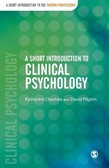
A Short Introduction to Clinical Psychology gives an accessible overview of the field for psychology students and anyone considering training as a clinical psychologist. Setting out the theoretical and practical dimensions of clinical psychology, the authors examine its origins, knowledge base and applications with different client groups, in ......
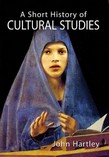
This is a unique history of cultural studies. Other books have explored the British and North American traditions, but this is the first guide to the ideas, purposes and controversies that have shaped the subject. John Hartley sheds new light on neglected pioneers and provides a clear route map through the terrain. John Hartley provides lively ......
This is a unique history of cultural studies. Other books have explored the British and North American traditions, but this is the first guide to the ideas, purposes and controversies that have shaped the subject. John Hartley sheds new light on neglected pioneers and provides a clear route map through the terrain. John Hartley provides lively ......
As a result of a review conducted by the Economic and Social Research Council (ESRC) and the Office for National Statistics (ONS), both previous government social classifications, Social Class based on Occupation and Socio-Economic Groups, were replaced in 2001 by a new classification, the National Statistics Socio-Economic Classification (NS-SEC). A Researcher's Guide to the National Statistics Socio-economic Classification arises from original research, including primary data collection, undertaken by ESRC for ONS. There is a foreword from Gordon Marshall the Chief Executive of the ESRC. A Researcher's Guide to the National Statistics Socio-economic Classification introduces researchers to all aspects of the new classification. In particular, it: fully describes the NS-SEC and elucidates its conceptual basis; guides readers into how the NS-SEC has been validated as a measure; evaluates how well NS-SEC works in describing and explaining the relationships between social class and key health and employment variables; demonstrates the applications of NS-SEC in research
Are cultural and material phenomena equally real? How can one study the relationships between cultural constructions, social behaviour and material conditions and draw a valid conclusion from the data? In contrast to interpretive or constructivist positions, realism supports the insights of critical theory in social and educational research ......
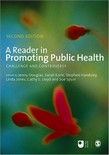
The second edition of A Reader in Promoting Public Health brings together a selection of readings that explore and challenge current thinking in the field of multidisciplinary public health. This thoroughly updated and revised new edition addresses contemporary issues that are high on the agenda of public health, and enables the reader to understand and negotiate this broad and dynamic field of study. The book is organised into five sections, each with an accessible and student-friendly introduction that pulls together the key themes and issues: - Back to the future? Reflections on multidisciplinary public health takes stock of the scope and ambition of contemporary public health; - Research for evidence-based practice explores research methods, tools and techniques for developing effective public health practice; - Promoting health through public policy examines policy challenges, responses and key debates at national, international and global level : - Promoting public health at a local level explores public health and health promotion in a participatory and community context; - Public health for the 21st century: whose voices? whose values? examines debates which expose alternative futures, priorities and boundaries for public health work. This second edition includes new material on health inequalities, health protection, social marketing and health promotion, as well as highlighting the practical requirements of public health work through 'grass roots' accounts of practice. It will be essential reading for all students of public health and health promotion, as well as for health and social care professionals.
The second edition of A Reader in Promoting Public Health brings together a selection of readings that explore and challenge current thinking in the field of multidisciplinary public health. This thoroughly updated and revised new edition addresses contemporary issues that are high on the agenda of public health, and enables the reader to understand and negotiate this broad and dynamic field of study. The book is organised into five sections, each with an accessible and student-friendly introduction that pulls together the key themes and issues: - Back to the future? Reflections on multidisciplinary public health takes stock of the scope and ambition of contemporary public health; - Research for evidence-based practice explores research methods, tools and techniques for developing effective public health practice; - Promoting health through public policy examines policy challenges, responses and key debates at national, international and global level : - Promoting public health at a local level explores public health and health promotion in a participatory and community context; - Public health for the 21st century: whose voices? whose values? examines debates which expose alternative futures, priorities and boundaries for public health work. This second edition includes new material on health inequalities, health protection, social marketing and health promotion, as well as highlighting the practical requirements of public health work through 'grass roots' accounts of practice. It will be essential reading for all students of public health and health promotion, as well as for health and social care professionals.
Detailing over 60 different special needs conditions this book is an ideal 'go-to-guide' to help teachers understand, identify and work with children who have special needs.
A Quick Guide to Special Needs is an easy go-to guide for busy teachers, SENCOs, practitioners and anyone else who is interested in pragmatic solutions to the challenges of teaching children and young people with additional needs. Detailing over 60 conditions which cause people to have additional needs, Bob Bates helps you broaden your understanding of different physical, neurological, psychological, and developmental needs with accessible bite-sized explanations of the conditions, best practice approaches to working with these learners, and how to apply them to your everyday teaching. Each individual need is explained over a 2-page spread and every entry includes: Case studies encouraging you to reflect on real-life situations to understand the impact each condition has on people and how they and their parents deal with it. Do it steps offering a simple step-by-step approach that you can follow in order to meet additional needs arising out of these conditions. Important steps for the classroom specifically for teachers to use. Recommended reading, suggesting books, articles and websites where further information on specific conditions are available. Whether you're a newly qualified or experienced teacher, or simply want to further your understanding on the vast variety of individual needs, this guide is the ideal dip-in dip-out reference point for SEND. Also from Bob Bates: Educational Leadership Simplified Learning Theories Simplified