Whistleblowing - informing on illegal and unethical practices in the workplace - is becoming increasingly common as staff speak out about their ethical concerns at work. It can have tragic consequences to the individual, as well as threatening the survival of the organization. It is, therefore, an issue of interest to managers, students of business and management, and employees. This book aims to provide a balanced approach to a topic which generates much emotion, concern and debate, through critical contributions from academics, lawyers, and especially from the whistleblowers themselves. A United States perspective is also included, since whistleblowers are protected by statute there under certain circumstances. A possible Code of Practice and agreed procedures, including arbitration, are recommended as a means of taking the sting out of an activity which generally leaves bruises, if not fatalities, on both sides. A continuum from valid to invalid is suggested for both whistleblowers and for the employer response. The book is divided into three parts. The first explains what whistleblowing is and outlines the major issues with many real life examples. It shows that whistleblowing could impact on anyone at any time, whether as actor or reactor. It considers how to use whistleblowers positively, and suggests preventive measures that an organization may take. The second part discusses professional perspectives. It contains important chapters on the legal background in both the US and the UK, and examines internal auditors and management accountants as well as staff in human resources, who often have to deal with the aftermath. It is rare to be able to read an employer's view and, for the first time, the other side of the case of whistleblowing nurse Graham Pink is revealed. The final part allows the whistleblowers to speak for themselves. These include a civil servant who informed on the secret services, an accountant concerned at false accounting, and a police sergeant who observed ill-treatment of prisoners.
Updated with an exciting new chapter on political crime that highlights the debated connections between crime and politics, the Third Edition of White-Collar Crime provides students with a comprehensive introduction to the most important topics within white-collar crime.
White-Collar Crime: A Text/Reader incorporates contemporary and classic readings (some including policy implications) accompanied by original text that provides a theoretical framework and context for students. This comprehensive book covers topics including crimes by workers in sales-oriented systems; crimes in the health care system; crimes by criminal justice professionals and politicians; crimes in the educational system; crimes in the economic and technological systems; crimes by employees in the housing industry; corporate crime; environmental crime; explanations of white-collar crime; and the police and court responses to white-collar crime.
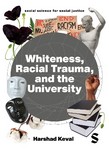
In this book Harshad Keval offers an intensely personal testimony of racial trauma within the academy. Proposing the theoretical model of "white narcissistic structures" the author traces the paradox of academic institutions simultaneously embracing a progressive and neo-liberal "cos-play" while continuing to generate and maintain racial trauma.
In this book Harshad Keval offers an intensely personal testimony of racial trauma within the academy. Proposing the theoretical model of "white narcissistic structures" the author traces the paradox of academic institutions simultaneously embracing a progressive and neo-liberal "cos-play" while continuing to generate and maintain racial trauma.
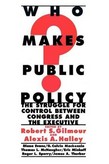
he Struggle for Control between Congress and the Executive
The editors synthesize ten case studies sponsored by the National Academy of Public Administration that relate stories of congressional intervention and suggest, in sum, a new theory of congressional-executive relations. Arguing that Congress cannot be dimissed as simply a troublesome meddler in agency programs or as an inattentive bystander in its oversight role, Gilmour and Halley draw from these case histories the surprising conclusion that Congress in facts acts regularly, with the executive branch, as a powerful co-manager of policy outlines and program details. Each case study is organized to examine the process and the results - for policy, for the institutions involved, for management, and for congressional-executive relations - when Congress intervenes in the administrative domain. Addressing specific issues in policy areas including transportation, environment, health, energy, defense and foreign affairs, a team of scholars and professionals explores these illustrative cases within a common framework that allows for identification and comparison of cross-case patterns.
ISBN-13: 9781566430043
(Paperback)
Publisher: SAGE PUBLICATIONS Imprint: CHATHAM HOUSE PUBLISHERS INC.,U.S.