We are an independent publisher and registered charity (non-profit organisation) dedicated to making available the work of Rudolf Steiner in English translation. We care a great deal about the content of our books and have hundreds of titles available – as printed books, ebooks and in audio formats.
Rudolf Steiner (1861-1925) called his spiritual philosophy “anthroposophy”, meaning “wisdom of the human being”. As a highly developed seer, he based his work on direct knowledge and perception of spiritual dimensions. He initiated a modern and universal “science of spirit”, accessible to anyone willing to exercise clear and unprejudiced thinking.
From his spiritual investigations Steiner provided suggestions for the renewal of many activities, including education (both general and special), agriculture, medicine, economics, architecture, science, philosophy, religion and the arts. Today there are thousands of schools, clinics, farms and other organizations involved in practical work based on his principles.
Replete with fresh immediacy, rich spiritual content, innovation and occasional humour, these talks were given at a time when Rudolf Steiner was preparing for independence from the Theosophical Society. Alongside the much-loved lectures ‘Nervousness and Ego Development’ – in which Steiner shares practical exercises for coping with contemporary ......
Barely four months after the end of the First World War, with Europe in chaos and exhausted from years of conflict, Rudolf Steiner offered these lectures of hope and renewal. Despite continuing social troubles around the world, he knew that human beings had an opportunity to organize society in a new way. Steiner responded to this prospect by ......
For a Cognition that Satisfies the Human Being The Relationship Between Spiritual Science and Natural Science
‘As soon as you start thinking about the living sphere, you have to make the thought itself mobile. The thought must begin to gain inner mobility through your own power.’ – Rudolf Steiner. Rudolf Steiner divides these absorbing, previously-untranslated lectures into three sections, opening with ‘The Value of Thinking’. Here, he discusses the ......
The Nature and Significance of Central Europe and the European Folk-Spirits
Speaking during the early stages of the First World War – with the Western Front just miles away and thousands of young men dying – Rudolf Steiner focuses on the subject of death. In particular, he addresses the difficult question of why some people die prematurely, particularly in youth. Steiner also speaks of the deaths of three of his ......
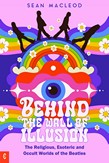
The Religious, Esoteric and Occult Worlds of the Beatles
The Beatles brought colour, joy, freedom and love to a grey, post-war world. But the most successful group in popular music history also harboured hidden, sometimes darker worlds and influences that are often downplayed by their biographers. In their career, the Fab Four were to cross paths with many spiritual movements, religious groups, esoteric ......
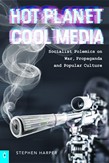
Socialist Polemics on War, Propaganda and Popular Culture
From the Arab Spring and London riots through the era of Brexit and Trump, the Covid-19 pandemic and war in Europe, this volume collects eleven years of lively, informative and entertaining essays and polemics, focusing on media treatment of major world events, political entanglements and culture-war squabbles. Taking aim at the distortions and ......