Founded in 1956, Penn State University Press publishes rigorously reviewed, high-quality works of scholarship and books of regional and contemporary interest, with a focus on the humanities and social sciences. The publishing arm of the Pennsylvania State University and a division of the Penn State University Libraries, the Press promotes the advance of scholarship by disseminating knowledge—new information, interpretations, methods of analysis—widely in books, journals, and digital publications.
Scholarly publishing has faced monumental challenges over the past few decades. The Press takes its place among those institutions moving the enterprise forward. Its innovative projects continue to identify and embrace the technological advances and business models that ensure scholarly publishing will remain feasible, and widely accessible, well into the future.
Follows the stories, in graphic novel format, of two twenty-something roommates, one Christian and one atheist, as they seek to find their place in the world. Explores the themes of faith deconstruction, identity, young love, and loss to create an engrossing world in which waking and sleeping dreams collide.
The City of David, more specifically the southeastern hill of first- and second-millennium BCE Jerusalem, has long captivated the imagination of the world. Archaeologists and historians, biblical scholars and clergy, Christians, Muslims, and Jews, and tourists and armchair travelers from every corner of the globe.
The Worst Presidential Campaigns from Jefferson to Trump
Explores the use of anti-democratic language in US presidential elections, using examples detailing the political, economic, and cultural elements that make such appeals more likely.
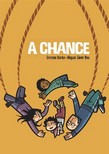
A narrative, in graphic novel format, following Cristina Duran and Miguel Angel Giner Bou as they rebuild and reinvent themselves after their daughter Laia is born with cerebral palsy. Their story continues through the arduous process of adopting their second daughter, Selam, from Ethiopia.
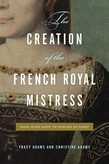
Explores the sociogenesis and development of the French royal mistress, examining the careers of nine of the most significant holders of that title between 1444 and the final years of the ancien regime.
This groundbreaking book seeks to explain why women artists were far more numerous, diverse, and successful in early modern Bologna than elsewhere in Italy.
Coptic is the final stage of the ancient Egyptian language, written in an alphabet derived primarily from Greek instead of hieroglyphics. It borrows some vocabulary from ancient Greek, and it was used primarily for writing Christian scriptures and treatises. There is no uniform Coptic language, but rather six major dialects.