Founded in 1956, Penn State University Press publishes rigorously reviewed, high-quality works of scholarship and books of regional and contemporary interest, with a focus on the humanities and social sciences. The publishing arm of the Pennsylvania State University and a division of the Penn State University Libraries, the Press promotes the advance of scholarship by disseminating knowledge—new information, interpretations, methods of analysis—widely in books, journals, and digital publications.
Scholarly publishing has faced monumental challenges over the past few decades. The Press takes its place among those institutions moving the enterprise forward. Its innovative projects continue to identify and embrace the technological advances and business models that ensure scholarly publishing will remain feasible, and widely accessible, well into the future.
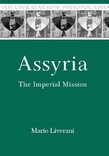
In ancient traditions, Assyria was the first world empire in a series that continued with Persia, Macedonia, and Rome. After Rome, we imagine the series bifurcating into a Western trajectory (from Charlemagne to Napoleon and the Third Reich) and an Oriental trajectory (from the Parthians and Sasanians to the Abbasids until the modern ......
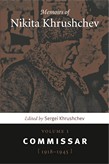
Nikita Khrushchev’s proclamation from the floor of the United Nations that "we will bury you" is one of the most chilling and memorable moments in the history of the Cold War, but from the Cuban Missile Crisis to his criticism of the Soviet ruling structure late in his career the motivation for Khrushchev’s actions ......
Frankie King was a precocious student and a promising basketball player at Brooklyn's James Madison High School in the early 1950s. Sportswriters were comparing Frankie to the greatest college and professional players of all time, and he was recruited as a starting guard at the University of North Carolina. But Frankie dropped out before playing a ......
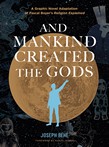
A Graphic Novel Adaptation of Pascal Boyer's Religion Explained
These are some of the most fundamental and enduring questions we have about the mysteries of religion, and they may well hold the key to humankinds future on this earth.
The 1948 Notebook, with Lectures and Critical Writings
Leo Strauss famously asserted that the fundamental, defining debate within Western civilization is that between Jerusalem and Athens, piety and philosophy, the Bible and Plato. And yet, surprisingly, Strauss never published any of his thoughts on Plato's dialogue on piety, the Euthyphro. This volume presents, for the first time, Strauss's 1948 ......
Traces the evolution of a Hebrew microcosm that models the interaction of human and divine bodies at the heart of both kabbalah and some forms of Western sex magic. Focuses on Jewish esoteric and medical sources from the fifth to the twelfth century from Byzantium, Persia, Iberia, and southern France.
The early modern period opened a new era in the history of dermal marking. Intensifying global travel and trade, especially the slave trade, bought diverse skin-marking practices into contact as never before.