Founded in 1956, Penn State University Press publishes rigorously reviewed, high-quality works of scholarship and books of regional and contemporary interest, with a focus on the humanities and social sciences. The publishing arm of the Pennsylvania State University and a division of the Penn State University Libraries, the Press promotes the advance of scholarship by disseminating knowledge—new information, interpretations, methods of analysis—widely in books, journals, and digital publications.
Scholarly publishing has faced monumental challenges over the past few decades. The Press takes its place among those institutions moving the enterprise forward. Its innovative projects continue to identify and embrace the technological advances and business models that ensure scholarly publishing will remain feasible, and widely accessible, well into the future.
As discrete fields of inquiry, rhetoric and mathematics have long been considered antithetical to each other. That is, if mathematics explains or describes the phenomena it studies with certainty, persuasion is not needed. This volume calls into question the view that mathematics is free of rhetoric. Through nine studies of the intersections ......
Examines how Argentina's Radical Party rallied popular support in Buenos Aires from 1916 to 1930. Argues that the methods used for popular mobilization helped to undermine democracy. The popularity of President Hipólito Yrigoyen is explored, as well as the government's relationship with unions.
Examines how Argentina's Radical Party rallied popular support in Buenos Aires from 1916 to 1930. Argues that the methods used for popular mobilization helped to undermine democracy. The popularity of President Hipólito Yrigoyen is explored, as well as the government's relationship with unions.
Examines the crown-sponsored architecture and urbanism of Naples during the reign of King Charles of Bourbon (1734-59). Shows how structures and public spaces helped consolidate royal authority and refashion the city into a royal capital.
How did a mid-eighteenth-century group, the so-called Pennsylvania Germans, build their cultural identity in the face of ethnic stereotyping, nostalgic ideals, and the views imposed by outside contemporaries? Numerous forces create a group’s identity, including the views of outsiders, insiders, and the shaping pressure of religious ......
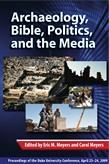
Proceedings of the Duke University Conference, April 23-24, 2009
Archaeological discoveries relating to the Bible are prominent in the public square. Even archaeological controversies normally confined to the pages of obscure journals are considered newsworthy when they touch on biblical themes, people, or places. However, scholars are not always equipped to handle this sort of attention. Thus, the ......
Papers from the 2004 National Endowment for the Humanities Summer Seminar at Duke University
From the 700s B.C.E. to the late 300s B.C.E., Aramaic was the international language of the ancient Near East. With the arrival of Alexander the Great in the 300s, Greek supplanted Aramaic, but Aramaic did not disappear. Although it gradually broke apart into dialects, in many regions of the former Persian Empire, Aramaic became the lingua ......
Language, Contestation, and the Shaping of Political Agency
Explores the theoretical and political implications of self-interest within the context of neoliberal political, theoretical, and methodological imperatives.
Language, Contestation, and the Shaping of Political Agency
Explores the theoretical and political implications of self-interest within the context of neoliberal political, theoretical, and methodological imperatives.