Founded in 1956, Penn State University Press publishes rigorously reviewed, high-quality works of scholarship and books of regional and contemporary interest, with a focus on the humanities and social sciences. The publishing arm of the Pennsylvania State University and a division of the Penn State University Libraries, the Press promotes the advance of scholarship by disseminating knowledge—new information, interpretations, methods of analysis—widely in books, journals, and digital publications.
Scholarly publishing has faced monumental challenges over the past few decades. The Press takes its place among those institutions moving the enterprise forward. Its innovative projects continue to identify and embrace the technological advances and business models that ensure scholarly publishing will remain feasible, and widely accessible, well into the future.
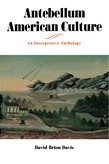
First published in 1979, this volume offers students and teachers a unique view of American history prior to the Civil War. Distinguished historian David Brion Davis has chosen a diverse array of primary sources that show the actual concerns, hopes, fears, and understandings of ordinary antebellum Americans. He places these sources within a ......
Sculptural Encounter in the Age of Aesthetic Theory
Explores tensions in aesthetics and art theory between antique figural sculpture experienced in the round and its translation into two-dimensional representations. Examines the work and thought of Goethe, Winckelmann, Hegel, Walter Pater, Vernon Lee, and others.
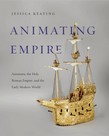
Automata, the Holy Roman Empire, and the Early Modern World
Recounts the histories of German clockwork automata, which were given as gifts and collected in the Holy Roman Empire, the Ottoman Empire, and Mughal Empire in the sixteenth and seventeenth centuries.
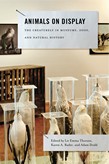
The Creaturely in Museums, Zoos, and Natural History
A collection of essays on the historical representation and display of animals. Using examples from the eighteenth century to the present, the essays situate case studies in historical and sociocultural context while addressing the importance of visibility for the arrangement and sustenance of human-animal ......
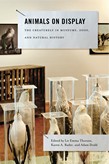
The Creaturely in Museums, Zoos, and Natural History
A collection of essays on the historical representation and display of animals. Using examples from the eighteenth century to the present, the essays situate case studies in historical and sociocultural context while addressing the importance of visibility for the arrangement and sustenance of human-animal ......
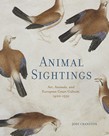
Art, Animals, and European Court Culture, 1400-1550
Animal Sightings challenges two common ideas about the depiction of animals in early modern European court art: first, that the human figure relegated animals to peripheral and often symbolic roles, both compositionally and conceptually, and second, that the representation of animals during this period was predominantly tied to a growing interest ......
Analysis of the roles of those involved in the herding of domestic animals and the distribution of animal products in a Sumerian city of the late third millennium. Discussed are: animal breeds, the organization of animal production, the distribution of production animals, the distribution of animal products, officials and employees involved in ......
Pets and Social Change in Eighteenth-Century Britain
Explores how thinking about pets in eighteenth-century Britain reflected and influenced the great social and cultural debates of the day, including struggles over gender, race, class, and national identity.
Pets and Social Change in Eighteenth-Century Britain
Explores how thinking about pets in eighteenth-century Britain reflected and influenced the great social and cultural debates of the day, including struggles over gender, race, class, and national identity.