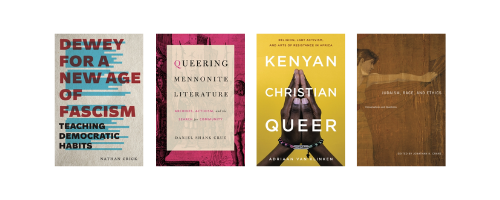
Founded in 1956, Penn State University Press publishes rigorously reviewed, high-quality works of scholarship and books of regional and contemporary interest, with a focus on the humanities and social sciences. The publishing arm of the Pennsylvania State University and a division of the Penn State University Libraries, the Press promotes the advance of scholarship by disseminating knowledge—new information, interpretations, methods of analysis—widely in books, journals, and digital publications.
Scholarly publishing has faced monumental challenges over the past few decades. The Press takes its place among those institutions moving the enterprise forward. Its innovative projects continue to identify and embrace the technological advances and business models that ensure scholarly publishing will remain feasible, and widely accessible, well into the future.
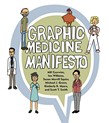
Combining scholarly essays with visual narratives and a conclusion in comics form, establishes graphic medicine as a new area of scholarship. Demonstrates that graphic medicine narratives offer patients, family members, and medical caregivers new ways to negotiate the challenges of the medical experience. Discusses comics as visual ......
A Renaissance Treatise on the Healing Properties of Gemstones
In early modern Europe precious and semiprecious stones were valued not only for their beauty and rarity but also for their medical and magical properties. Lorenzo de' Medici, Philip II of Spain, and Popes Leo X and Clement VII were all treated with expensive potions incorporating ground gems such as rubies, diamonds, and emeralds. Medical and ......
Djuna Barnes once said that there is always more surface to a shattered object than a whole object, and the statement is provocative when considering her own writing and art. Arriving as an accomplished writer and journalist in 1920s Paris, Barnes produced an eclectic body of work whose objects and surfaces continue to fascinate readers. In ......
Traces the evolution of a Hebrew microcosm that models the interaction of human and divine bodies at the heart of both kabbalah and some forms of Western sex magic. Focuses on Jewish esoteric and medical sources from the fifth to the twelfth century from Byzantium, Persia, Iberia, and southern France.
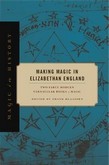
Examines two anonymous manuscripts of magic produced in Elizabethan England: the Antiphoner Notebook and the Boxgrove Manual. Explores how scribes assembled these texts within wider cultural developments surrounding early modern forms of magic.
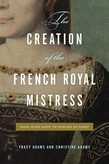
Explores the sociogenesis and development of the French royal mistress, examining the careers of nine of the most significant holders of that title between 1444 and the final years of the ancien regime.
Coptic is the final stage of the ancient Egyptian language, written in an alphabet derived primarily from Greek instead of hieroglyphics. It borrows some vocabulary from ancient Greek, and it was used primarily for writing Christian scriptures and treatises. There is no uniform Coptic language, but rather six major dialects.
Nikita Khrushchev’s proclamation from the floor of the United Nations that “we will bury you” is one of the most chilling and memorable moments in the history of the Cold War, but from the Cuban Missile Crisis to his criticism of the Soviet ruling structure late in his career, the motivation for Khrushchev’s actions ......