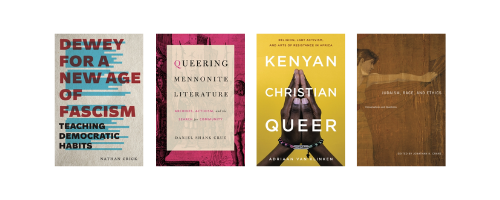
Founded in 1956, Penn State University Press publishes rigorously reviewed, high-quality works of scholarship and books of regional and contemporary interest, with a focus on the humanities and social sciences. The publishing arm of the Pennsylvania State University and a division of the Penn State University Libraries, the Press promotes the advance of scholarship by disseminating knowledge—new information, interpretations, methods of analysis—widely in books, journals, and digital publications.
Scholarly publishing has faced monumental challenges over the past few decades. The Press takes its place among those institutions moving the enterprise forward. Its innovative projects continue to identify and embrace the technological advances and business models that ensure scholarly publishing will remain feasible, and widely accessible, well into the future.
Verbal Play, Interpretation, and the Roots of Iconophobia
Reading the Written Image is a study of the imagination as it is prompted by the verbal cues of literature. Since every literary image is also a mental image, a representation of an absent entity, Collins contends that imagination is a poiesis, a making-up, an act of play for both author and reader. The "willing suspension of ......
The multifaceted career of John Thelwall (1764-1834)—poet, novelist, playwright, journalist, politician, scientist—is the lens through which we are offered here a new look at the phenomenon of British Jacobinism, long distorted by the critical view of it as intellectually weak bequeathed to us by Coleridge and Wordsworth, once ......
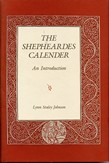
The Shepheardes Calender is the poem that launched Edmund Spenser's career and changed the direction of English poetry. In this reappraisal, Lynn Staley Johnson demonstrates that Spenser himself made a self-conscious effort to create a new literature, a new esthetic for a new era. Drawing upon a wide range of primary sources, she ......
While the decline of the male hero in nineteenth- and twentieth-century literature is usually studied in isolation, Druxes uses a major manifestation of this phenomenon—the failing power of the Faust myth—as an interpretive lens through which to illuminate the corresponding rise in the viability of female Faustian heroes or would-be ......
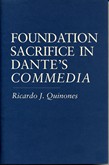
Foundation Sacrifice in Dante's "Commedia" is the first book to take an anthropological approach to the Divine Comedy, applying it to a previously unexplored dimension of Dante's great poem. Ricardo Quinones examines foundation sacrifice—the death of another that has become a parable for existence—as a ......
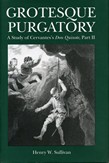
Cervantes's great novel Don Quixote is a diptych, the first part of which was published in 1605 and the second in 1615. Focusing almost entirely on the novel's second part, Henry W. Sullivan is the first critic to offer a systematic account of Don Quixote's passage from madness to sanity. Sullivan argues that Part II of the novel is a ......
Norman Austin has organized his analysis of classical Greek myths around Lacan's dichotomy between (ineffable) Being and the meanings imposed upon Being by culturally determined signifiers. The primary signifiers in myth (the gods), as projections of contradictory meanings, impel human consciousness in contradictory directions: toward heroic ......
Making sense of the world around us is a process involving both semiotic and material mediation—the use of signs and sign systems (preeminently language) and various kinds of tools (technics). As we use them, we experience them subjectively as extensions of our bodily selves and objectively as instruments for accessing the world with ......
Scaramuzza, Scaramouche: the commedia dell'arte figure made a triumphal entry into German literature in the plays of Caspar Stieler (1632–1707). Transformed into a master of language and languages, Scaramutza—social critic, voluptuary, and mouthpiece for his author—ushers in a new type of comedy that depends more on the happy ......