Founded in 1956, Penn State University Press publishes rigorously reviewed, high-quality works of scholarship and books of regional and contemporary interest, with a focus on the humanities and social sciences. The publishing arm of the Pennsylvania State University and a division of the Penn State University Libraries, the Press promotes the advance of scholarship by disseminating knowledge—new information, interpretations, methods of analysis—widely in books, journals, and digital publications.
Scholarly publishing has faced monumental challenges over the past few decades. The Press takes its place among those institutions moving the enterprise forward. Its innovative projects continue to identify and embrace the technological advances and business models that ensure scholarly publishing will remain feasible, and widely accessible, well into the future.
Provides a definition and defense of individual privacy rights. Applies the proposed theory to issues including privacy versus free speech; drug testing; and national security and public accountability.
Lucio Fontana, Yves Klein, and the Postwar European Avant-Garde
Explores an international network of artists, artist groups, and critics linked by their aesthetic and theoretical responses to science, science fiction, and new media. Focuses on the Italian Spatial Artist Lucio Fontana and French Painter of Space Yves Klein.
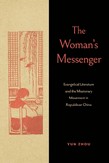
Evangelical Literature and the Missionary Movement in Republican China
Throughout the first half of the twentieth century, China underwent tumultuous times—from nation building and the New Culture Movement to the Japanese occupation and the renunciations accompanying the Korean War.
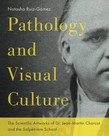
The Scientific Artworks of Dr. Jean-Martin Charcot and the Salpetriere School
In this book, Natasha Ruiz-Gomez delves into an extraordinary collection of pathological drawings, photographs, sculptures, and casts created by neurologists at Paris's Hopital de la Salpetriere in the nineteenth century. Led by Dr. Jean-Martin Charcot (1825-1893) and known collectively as the Salpetriere School, these savants-artistes produced ......
The Lives of Desert Saints in Fourteenth-Century Italy
During the fourteenth century in Western Europe, there was a growing interest in imitating the practices of a group of hermits known as the Desert Fathers and Mothers. Laypeople and religious alike learned about their rituals not only through readings from the Vitae patrum (Lives of the Desert Fathers) and sermons but also through the images that ......
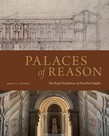
Traces the history of three massive palaces built outside Naples in the eighteenth century-at Capodimonte, Portici, and Caserta-and examines how these buildings were designed to help reshape the economic and cultural fortunes of the Kingdom of the Two Sicilies.
A revisionist account of the Spanish witch-hunt that took place in northern Navarre from 1608 to 1614. Combines new readings of the Inquisitional evidence with archival finds from non-Inquisitional sources, including local secular and religious courts, and from notarial and census records.