Founded in 1956, Penn State University Press publishes rigorously reviewed, high-quality works of scholarship and books of regional and contemporary interest, with a focus on the humanities and social sciences. The publishing arm of the Pennsylvania State University and a division of the Penn State University Libraries, the Press promotes the advance of scholarship by disseminating knowledge—new information, interpretations, methods of analysis—widely in books, journals, and digital publications.
Scholarly publishing has faced monumental challenges over the past few decades. The Press takes its place among those institutions moving the enterprise forward. Its innovative projects continue to identify and embrace the technological advances and business models that ensure scholarly publishing will remain feasible, and widely accessible, well into the future.
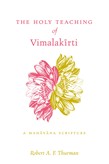
This book presents the major teachings of Mahāyāna Buddhism in a precise, dramatic, and even humorous form. For two millennia this Sūtra, called the “jewel of the Mahāyāna Sūtras,” has enjoyed immense popularity among Mahāyāna Buddhists in India, central and southeast Asia, Japan, and ......
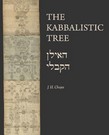
Explores the history and meanings of ilanot, diagrammatic representations of the Divine as a Porphyrian tree in Jewish mysticism and kabbalistic manuscripts.
Looking at Trauma: A Tool Kit for Clinicians is an easy-to-use, engaging resource designed to address the challenges health care professionals face in providing much-needed trauma psychoeducation to clients with histories of childhood trauma. Developed by trauma therapists Abby Hershler and Lesley Hughes in collaboration with artist Patricia ......
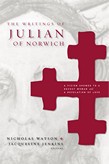
A Vision Showed to a Devout Woman and A Revelation of Love
Julian of Norwich (ca. 1343–ca. 1416), a contemporary of Geoffrey Chaucer, William Langland, and John Wyclif, is the earliest woman writer of English we know about. Although she described herself as “a simple creature unlettered,” Julian is now widely recognized as one of the great speculative theologians of the Middle Ages, ......
The Biblical Hebrew Vocabulary Card provides learners with easy access to the words that appear on almost every page of the Hebrew Bible. This six-page trifold study guide translates 1,600 of the most common words in the Hebrew Bible, arranged alphabetically, with straightforward and precise definitions. Along with the Biblical Hebrew Grammar ......
Purity Culture, Bodies, and Beliefs confronts the enduring effects of religious trauma by centering the body as both a site of harm and a source of healing. This collection offers a necessary space for truth telling, grief, and renewal. Bringing together critical autoethnographies and theoretical reflection, this volume examines how purity ......
Speech Act Theory, Dual Authorship, and Theological Interpretation
Christian readers of the Hebrew Bible are often faced with a troubling tension. On the one hand, they are convinced that this ancient text is relevant today, yet on the other, they remain perplexed at how this can be so, particularly when parts of it appear to condone violence. Barker’s volume seeks to address this tension in two parts: ......
The Creation of Humankind in Genesis 2:5-3:24 in Light of the mis pi, pit pi, and wpt-r Rituals of Mesopotamia and Ancient Egypt
Catherine McDowell presents a detailed and insightful analysis of the creation of adam in Gen 2:5–3:24 in light of the Mesopotamian mīs pî pīt pî (“washing of the mouth, opening of the mouth”) and the Egyptian wpt-r (opening of the mouth) rituals for the creation of a divine image. ......
Appropriate for beginning and advanced students of Biblical Hebrew, this easy-to-use reference guide provides a concise summary of basic grammar concepts in an accessible format. Condensed into a six-page trifold format, the Biblical Hebrew Grammar Card neatly presents topics such as prefixes, nouns, adjectives, and suffixes, as well as numbers, ......