American Psychiatric Association Publishing is the world’s premier publisher of books, journals, and multimedia on psychiatry, mental health, and behavioural science. We offer authoritative, up-to-date, and affordable information geared toward psychiatrists, other mental health professionals, psychiatric residents, medical students, and the general public.
APA Publishing is a division of the American Psychiatric Association. Its purpose is twofold: to serve as the distributor of publications of the Association and to publish books independent of the policies and procedures of the American Psychiatric Association. APA Publishing has grown since its founding in 1981 into a full-service publishing house, including a staff of editorial, production, marketing, and business experts devoted to publishing for the field of psychiatry and mental health.
This book uses actual interviews with children to show readers how to apply a developmental, biopsychosocial framework for understanding the inner lives of children at different ages and stages. It outlines proven techniques for helping infants and children to reveal their feelings, thoughts, and behaviors during the clinical interview.
This volume presents a timely account of the present state of ECT research and clinical practice and the irreplaceable niche ECT occupies in the treatment hierarchy of severe mental illness. This book reviews -- comprehensively and carefully -- today's knowledge of indications, techniques, clinical outcomes, and mechanisms of action of ECT.
Measurement-based care, for many busy clinicians, may sound like just another time-intensive, potentially costly venture. Or worse, they may even see it as an affront to their own clinical judgment.
These include developmental age-related aspects of psychiatric diagnosis and symptom presentation; underlying neuro-circuitry and genetic similarities that may clarify diagnostic boundaries and inform a more etiologically-based taxonomy of disorder categories.
This edition covers changes in the classification, management, and treatment of dementing illness. It includes a world-class presentation on the molecular and genetic basis of Alzheimer's disease; a chapter on neuroimaging, and discussions of mild cognitive impairment, the frontotemporal dementias, and the dementias associated with Lewy bodies.
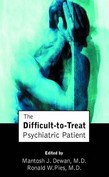
In this book, experts address the sequential clinical steps to be taken in treating difficult-to-treat psychiatric patients by offering a blend of evidence-based clinical recommendations, detailed case vignettes, treatment algorithms, and the clinical wisdom of leaders in the field.
In this book, experts address the sequential clinical steps to be taken in treating difficult-to-treat psychiatric patients by offering a blend of evidence-based clinical recommendations, detailed case vignettes, treatment algorithms, and the clinical wisdom of leaders in the field.
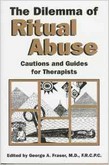
Experts in the field offer balanced, carefully considered advice on approaches therapists can use when patients report they have experienced ritual abuse. These qualified clinicians explain and demonstrate their techniques and offer caveats against accepting a patient's recollections at face value.
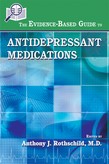
The Evidence-Based Guide to Antidepressant Medications, provides a clear reference to the current knowledge and evidence base for the use of antidepressants among a variety of patients across a wide range of disorders.