American Psychiatric Association Publishing is the world’s premier publisher of books, journals, and multimedia on psychiatry, mental health, and behavioural science. We offer authoritative, up-to-date, and affordable information geared toward psychiatrists, other mental health professionals, psychiatric residents, medical students, and the general public.
APA Publishing is a division of the American Psychiatric Association. Its purpose is twofold: to serve as the distributor of publications of the Association and to publish books independent of the policies and procedures of the American Psychiatric Association. APA Publishing has grown since its founding in 1981 into a full-service publishing house, including a staff of editorial, production, marketing, and business experts devoted to publishing for the field of psychiatry and mental health.
This book lays the traditional diagnostic oversimplification of schizophrenia to rest once and for all. The editors of this groundbreaking work challenge the reductionist view of schizophrenia as a single unitary disorder -- a view that has led many psychiatrists and mental health care professionals to overlook potentially important syndromes.
This book presents today's ethical dilemmas regarding boundary violations; children, adolescents, and families; geriatric populations; involuntary hospitalization; managed care; confidentiality; gifts; duty to report colleagues who engage in fraud or deception; emergency care; forensic psychiatry; and consultations and second opinions.
This book teaches psychiatrists, mental health professionals, and administrators how reviewers think and how to present a case in a manner that greatly increases the likelihood that a reviewer will approve the request for care. Issues are highlighted in vignettes illustrating a clinician's presentation of a case and a typical reviewer's comments.
The Interface Between Psychiatry and Obstetrics and Gynecology
Both a clinical and a theoretical sourcebook, this second edition addresses every major area of contemporary concern in its three sections. This volume is exceptionally useful as a teaching reference for medical and other health care students and residents in psychiatry and obstetrics and gynecology.
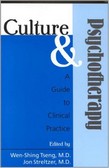
This remarkable work presents the nuts and bolts of incorporating culture into therapy in a way that is immediately useful and practical. Illustrated by numerous case studies that demonstrate issues, techniques, and recommendations, this volume focuses not on specific race or ethnicity but instead on culture.
This practice guideline seeks to summarize data and specific forms of treatment regarding the care of patients with HIV/AIDS. The purpose of this guideline is to assist the psychiatrist in caring for a patient with HIV/AIDS by reviewing the treatments that patients with HIV/AIDS may need.
This workbook is an initial approach for helping teenagers become aware, both cognitively and emotionally, of the negative consequences of their drug and/or alcohol use. It is hoped that by seeing for themselves how not using can make their life better, teenagers will become motivated toward beginning treatment. This is a package of 5.
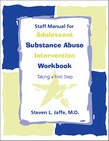
This is a staff manual for an intervention workbook made to help teenagers using drugs and alcohol recognize the frequency and negative consequences of that use
This volume covers everything from starting a career to measurement and assessment methods, and from statistics to the use of human subjects, as well as related ethics and misconduct issues. Also included is research support -- provides a roadmap for those seeking research support in the U.S., detailing how to write grants from the ground up.