American Psychiatric Association Publishing is the world’s premier publisher of books, journals, and multimedia on psychiatry, mental health, and behavioural science. We offer authoritative, up-to-date, and affordable information geared toward psychiatrists, other mental health professionals, psychiatric residents, medical students, and the general public.
APA Publishing is a division of the American Psychiatric Association. Its purpose is twofold: to serve as the distributor of publications of the Association and to publish books independent of the policies and procedures of the American Psychiatric Association. APA Publishing has grown since its founding in 1981 into a full-service publishing house, including a staff of editorial, production, marketing, and business experts devoted to publishing for the field of psychiatry and mental health.
Four sections address topics such as the history of the TGNC experience, mental health factors particular to the TGNC community, physical health -- including hormones -- of TGNC individuals, gender-affirming surgical procedures, and nonsurgical interventions. Summarizing key points and review questions are included at the end of each chapter.
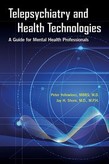
A practical guide for psychiatrists and other mental health professionals seeking to exploit the enormous potential of today's innovative digital technologies to improve the quality, accessibility, and cost-effectiveness of care for patients with psychiatric disorders.
The guideline focuses specifically on evidence-based pharmacological treatments for AUD in outpatient settings and includes additional information on assessment and treatment planning, which are an integral part of using pharmacotherapy to treat AUD.
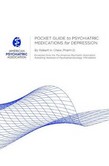
An indispensable guide to medications for the treatment of depression, including vital information on the approved indications, usual dosages, and maximum dosages for antidepressant medications.
Bulleted clinical pearls at the end of each chapter, as well as specific clinical recommendations and detailed case discussions throughout the book, make it easier for readers to retain knowledge and integrate it into their practice.
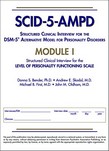
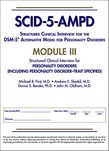
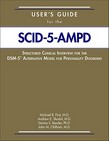
Trained clinicians with a basic knowledge of the concepts of personality and personality psychopathology will benefit from the myriad applications and insights offered by the SCID-5-AMPD.
Module II focuses on the dimensional assessment of the five pathological personality trait domains in the Alternative Model and their corresponding 25 trait facets.
Trained clinicians with a basic knowledge of the concepts of personality and personality psychopathology will find the SCID-5-AMPD a valuable tool in the assessment and study of personality disorders.