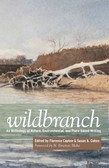
An Anthology of Nature, Environmental, and Place-based Writing
Wildbranch: An Anthology of Nature, Environmental, and Place-based Writing is a powerful collection of mostly unpublished essays and poetry by both prominent American environmental writers and exciting new voices. The poetry and essays by more than fifty contributors offer the reader glimpses into places as diverse as a forest in West Africa, the ......
In The Turk in America, historian Justin McCarthy seeks to explain the historical basis for American prejudice towards Turks in the nineteenth and early twentieth centuries. The volume focuses on fraudulent characterizations of Turks, mostly stemming from an antipathy in Europe and America toward non-Christians, and especially Muslims. Spanning ......
Great Basin Human Ecology at the Pleistocene-Holocene Transition
Were the earliest inhabitants of the Great Basin 'Paleoindians' in the traditional sense? Were they highly mobile foragers? Did they hunt large, now extinct animals like mammoth, horse, and camel? Great Basin archaeologists have argued that the earliest inhabitants possessed an organization strategy of mixed 'Paleoindian' and 'Archaic' lifeways, ......
Born in Kentucky in 1810 and raised for a time in both Quaker and Shaker communities, Hosea Stout converted to Mormonism in his late twenties. He eventually rose to great rank within the religion, serving in Nauvoo as clerk of the High Council, officer in the militia and in the Nauvoo Legion, and chief of police. After the murder of Joseph Smith ......
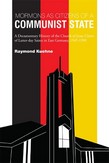
A Documentary History of the Church of Jesus Christ of Latter-day Saints in East Germany, 1945-1990
From 1945 to 1990 communist East Germany was an officially atheistic state. Nevertheless, members of the Church of Jesus Christ of Latter-day Saints practiced their religion there. Mormons as Citizens of a Communist State is based on primary sources---government and church documents, interviews, and private letters ---to create a documentary ......
Northeast Asia and Beringia Before the Last Glacial Maximum
Where did the first Americans come from and when did they get here? That basic question of American archaeology, long thought to have been solved, is re-emerging as a critical issue as the number of well-excavated sites dating to pre-Clovis times increases. It now seems possible that small populations of human foragers entered the Americas prior ......
Bioarchaelogical Reconstruction and Interpretation
Prehistoric Lifeways of the Great Basin Wetlands examines how the earliest inhabitants of the Great basin in Nevada, Utah, and Oregon made use of ancient marshes and lakes. When the Great Salt Lake receded in the 1980s from its highest historically recorded levels, it exposed a large number of archaeological and burial sites. Other wetland areas ......
Edited by Michael S. Foster and Shirley Gorenstein Archaeology Mesoamerican studies, as they are still practiced today, are framed by the Spanish colonial intrusion into Mexico from the east, and subsequent involvement with the Aztec Empire. Greater Mesoamerica expands the definition of "Mesoamerica" beyond the more traditionally accepted ......
A Scrapbook of the National Park's First Official Tourists
When Melissa Clark purchased a box of old scrapbooks online, she knew only that she had bought something relating to the University of Utah and Zion Park. What came in the mail was much more than she had expected. Instead of random mementos, two albums arrived full of photographs and newspaper clippings dating to 1920 that document a trip made by ......