Questions at the very heart of the American experiment-about what the nation is and who its people are-have lately assumed a new, even violent urgency. As the most fundamental aspects of American citizenship and constitutionalism come under ever more powerful pressure, and as the nation's politics increasingly give way to divisive, partisan ......
A Jewish Family's Story of Surviving the Holocaust in Soviet Ukraine
When we think of Nazi camps, names such as Auschwitz, Bergen-Belsen, and Dachau come instantly to mind. Yet the history of the Holocaust extends beyond those notorious sites. In the former territory of Transnistria, located in occupied Soviet Ukraine and governed by Nazi Germany's Romanian allies, many Jews perished due to disease, starvation, and ......
In "Cotton County," the first of the dual memoirs in The Land and the Days, acclaimed author Tracy Daugherty describes the forces that shape us: the "rituals of our regions" and the family and friends who animate our lives and memories. Combining reminiscence, history, and meditation, Daugherty retraces his childhood in Texas and Oklahoma, where ......
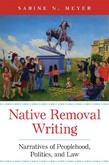
During the Standing Rock Sioux protest against the Dakota Access Pipeline, an activist observed, "Forced removal isn't just in the history books." Sabine N. Meyer concurs, noting the prominence of Indian Removal, the nineteenth-century policy of expelling Native peoples from their land, in Native American aesthetic and political praxis across the ......
Mexican American Moderates during the Chicano Movement, 1960-1978
The Chicano Movement of the 1960s and '70s, like so much of the period's politics, is best known for its radicalism: militancy, distrust of mainstream institutions, demands for rapid change. Less understood, yet no less significant in its aims, actions, and impact, was the movement's moderate elements. In the Midst of Radicalism presents the first ......
During the Standing Rock Sioux protest against the Dakota Access Pipeline, an activist observed, "Forced removal isn't just in the history books." Sabine N. Meyer concurs, noting the prominence of Indian Removal, the nineteenth-century policy of expelling Native peoples from their land, in Native American aesthetic and political praxis across the ......
Leader of the Santee Sioux, Inkpaduta (1815-79) participated in some of the most decisive battles of the northern Great Plains, including Custer's defeat at the Little Bighorn. But the attack in 1857 on forty white settlers known as the Spirit Lake Massacre gave Inkpaduta the reputation of being the most brutal of all the Sioux leaders. Paul N. ......
Over five centuries of foreign rule-by Spain, Mexico, and the United States-Native American pueblos have confronted attacks on their sovereignty and encroachments on their land and water rights. How five New Mexico and Texas pueblos did this, in some cases multiple times, forms the history of cultural resilience and tenacity chronicled in Pueblo ......
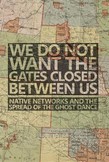
In the 1860s and 1870s, the United States government forced most western Native Americans to settle on reservations. These ever-shrinking pieces of land were meant to relocate, contain, and separate these Native peoples, isolating them from one another and from the white populations coursing through the plains. We Do Not Want the Gates Closed ......