In the wake of Russia's invasion of Ukraine in February 2022, with U.S.-Russia relations approaching a breaking point, this book provides a key to understanding how we got here. Specifically, Stephen P. Friot asks, how do Russians and Americans think about each other, and why do they see the world so differently? The answers, Friot suggests, lie ......
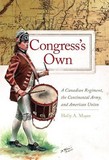
A Canadian Regiment, the Continental Army, and American Union
Colonel Moses Hazen's 2nd Canadian Regiment was one of the first "national" regiments in the American army. Created by the Continental Congress, it drew members from Canada, eleven states, and foreign forces. "Congress's Own" was among the most culturally, ethnically, and regionally diverse of the Continental Army's regiments-a distinction that ......
In this groundbreaking work, Scott A. Frisch and Sean Q Kelly draw on significant new data from congressional archives-gleaned from the papers of both Democratic and Republican leaders from the 85th to the 103rd Congress-to reveal the complex process through which congressional members get assigned to the powerful committees of the House. They ......
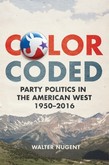
The now - staunchly red state of Texas was deep blue in 1950 and had virtually no functioning Republican Party. California, on the other hand, was reliably red. Today, both states have jumped to the opposite end of the political spectrum. Texas is one of the most conservative states, while California has become one of today's most liberal ......
Tejano Back-to-Mexico Movements and the Making of a Settler Colonial Nation
In the late nineteenth century, the Mexican government, seeking to fortify its northern borders and curb migration to the United States, set out to relocate "Mexico-Texano" families, or Tejanos, on Mexican land. In Colonizing Ourselves, Jose? Angel Herna?ndez explores these movements back to Mexico, also known as autocolonization, as distinct in ......
Following Zebulon Pike's expeditions in the early nineteenth century, U.S. expansionists focused their gaze on the Southwest. Explorers, traders, settlers, boundary adjudicators, railway surveyors, and the U.S. Army crossed into and through New Mexico, transforming it into a battleground for competing influences determined to control the region. ......
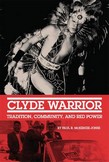
The phrase Red Power, coined by Clyde Warrior (1939-1968) in the 1960s, introduced militant rhetoric into American Indian activism. In this first-ever biography of Warrior, historian Paul R. McKenzie-Jones presents the Ponca leader as the architect of the Red Power movement, spotlighting him as one of the most significant and influential figures ......
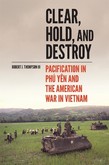
Pacification in Phu Yen and the American War in Vietnam
By the end of the American War in Vietnam, the coastal province of PhU YEn was one of the least-secure provinces in the Republic of Vietnam. It was also a prominent target of the American strategy of pacification-an effort, purportedly separate and distinct from conventional warfare, to win the "hearts and minds" of the Vietnamese. In Robert J. ......
Historians have long assumed that ethnic and racial divisions in post-Civil War America were reflected in the U.S. Army, of whose enlistees 40 percent were foreign-born. Now Kevin Adams shows that the frontier army was characterized by a "Victorian class divide" that overshadowed ethnic prejudices.Class and Race in the Frontier Army marks the ......