Johns Hopkins University Press provides authors with a reputable forum for evidence-based discourse and exposure to a worldwide audience.
With critically acclaimed titles in history, science, higher education, health and wellness, humanities, classics, and public health, the Books Division publishes 150 new books each year and maintains a backlist in excess of 3,000 titles. With warehouses on three continents, worldwide sales representation, and a robust digital publishing program, the Books Division connects Hopkins authors to scholars, experts, and educational and research institutions around the world.
A sweeping history of how writing has preserved cultural practices, traditions, and knowledge throughout human history. In How Writing Made Us Human, 3000 BCE to Now, Walter Stephens condenses the massive history of the written word into an accessible, engaging narrative. The history of writing is not merely a record of technical ......
Hailed as the definitive portrait of the sixteenth president, Lincoln scholar Michael Burlingames impressive two-volume biography has been masterfully abridged and revised.
Sixteenth president of the United States, the Great Emancipator, and a surpassingly eloquent champion of national unity, freedom, and ......
How did creative genius develop in tandem with the criminalization of Blackness in the early United States? In Criminal Genius in African American and US Literature, 1793-1845, Erin Forbes uncovers a model of racialized, collective agency in American literature and culture. Identifying creative genius in the figure of the convict, the zombie, the ......
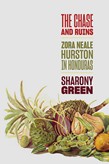
A fascinating look at a pivotal period in Zora Neale Hurston's life that reimagines her complicated legacy. Zora Neale Hurston, an anthropologist and writer best known for her classic novel Their Eyes Were Watching God, led a complicated life often marked by tragedy and contradictions. When both she and her writing fell out of favor after the ......
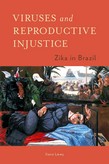
Brazil's Zika outbreak revealed extreme health disparities and reproductive injustice across racial and socioeconomic lines. Brazil's 2015 Zika outbreak led to severe illnesses for many and the birth of several thousands of children with severe brain damage. Even though mosquito-borne diseases such as the Zika virus affect people across society, ......
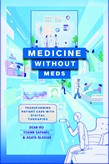
How digital therapies can transform your health. Traditional health care has a new ally. Some patients with sleep disorders, back pain, and diabetes are now being prescribed app-based treatment instead of drugs. Algorithms are helping cancer patients manage their symptoms, and video games are improving the attention span of children diagnosed ......
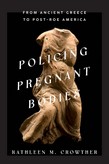
Explores the historical roots of controversies over abortion, fetal personhood, miscarriage, and maternal mortality. On June 24, 2022, the US Supreme Court overturned the Roe v. Wade decision, asserting that the Constitution did not confer the right to abortion. This ruling, in the Dobbs v. Jackson Women's Health case, was the culmination of a ......
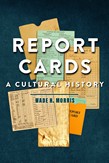
The definitive history of the report card. Report cards represent more than just an account of academic standing and attendance. The report card also serves as a tool of control and as a microcosm for the shifting power dynamics among teachers, parents, school administrators, and students. In Report Cards: A Cultural History, Wade H. Morris ......
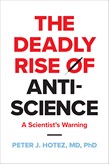
Dr. Peter Hotez discusses how an antivaccine movement became a dangerous political campaign promoted by elected officials and amplified by news media, causing thousands of American deaths.
During the height of the COVID-19 pandemic, one renowned scientist, in his famous bowtie, appeared daily on major news ......