Johns Hopkins University Press provides authors with a reputable forum for evidence-based discourse and exposure to a worldwide audience.
With critically acclaimed titles in history, science, higher education, health and wellness, humanities, classics, and public health, the Books Division publishes 150 new books each year and maintains a backlist in excess of 3,000 titles. With warehouses on three continents, worldwide sales representation, and a robust digital publishing program, the Books Division connects Hopkins authors to scholars, experts, and educational and research institutions around the world.
''Josephine Jacobsen gives us a startling word-by-word gift. Her charactershuman and animalknow edginess and exhilaration. She is unfoolable. Her judgment is lyric, wise, and daring. She looks all around, her angle of vision invariably original, able to switch from the periscopic to the circumferential.''--The 1995 National Book Awards The ......
In this provocative work, Mary Burgan surveys the deterioration of faculty influence in higher education. From campus planning, curriculum, and instructional technology to governance, pedagogy, and academic freedom, she urges far greater consideration for the perspective of the faculty. Burgan evokes the pervasive atmosphere of charge and ......
''The biggest contribution of Vincenti's splendidly crafted book may well be that it offers us a believably human image of the engineer.''--Technology Review.Johns Hopkins Studies in the History of Technology.Merritt Roe Smith, Series Editor.
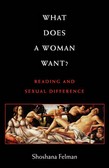
''What does a woman want?''--the question Freud famously formulated in a letter to Marie Bonaparte--is a quintessentially male question that arises from women's resistance to their place in a patriarchal society. But what might it mean, asks Shoshana Felman, for a woman to reclaim this question as her own? Can this question engender, through the ......
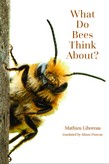
Explore the mind of a bee and learn what drives its behavior. Have you ever observed a bee up close and wondered what was going on inside its head? Like ours, insects' brains take up most of the space in their heads, but their brains are smaller than a grain of rice, only 0.0002% as large as ours. But what purpose does the insect brain serve, and ......
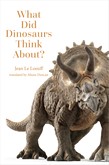
Reveals the fascinating behaviors and social lives of dinosaurs. What do we truly know about the intelligence of dinosaurs? In What Did Dinosaurs Think About? paleontologist Jean Le Loeuff takes us beyond these captivating animals' cinematic portrayals in Jurassic Park to illustrate how these creatures truly lived, hunted, socialized, and ......
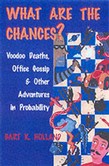
Voodoo Deaths, Office Gossip, and Other Adventures in Probability
Our lives are governed by chance. But what, exactly, is chance? In this book, accomplished statistician and storyteller Bart K. Holland takes us on a tour of the world of probability. Weaving together tales from real lifefrom the spread of the bubonic plague in medieval Europe or the number of Prussian cavalrymen kicked to death by their horses, ......
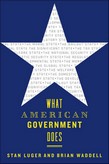
It has become all too easy to disparage the role of the US government today. Many Americans are influenced by a simplistic anti-government ideology that is itself driven by a desire to roll back the more democratically responsive aspects of public policy. But government has improved the lives of Americans in numerous ways, from providing ......
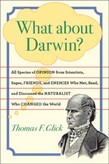
All Species of Opinion from Scientists, Sages, Friends, and Enemies Who Met, Read, and Discussed the Naturalist Who Changed the World
Charles Darwin and his revolutionary ideas inspired pundits the world over to put pen to paper. In this unique dictionary of quotations, Darwin scholar Thomas Glick presents fascinating observations about Darwin and his ideas from such notable figures as P. T. Barnum, Anton Chekhov, Mahatma Gandhi, Carl Jung, Martin Luther King, Mao Tsetung, Pius ......