An Inspector Bonaparte Mystery # 11 featuring Bony, the first Aboriginal detective. A cat... a ping-pong ball... a drunken gardener... With these slight clues to go on Detective-Inspector Bonaparte investigates the mysterious death of famous author, Mervyn Blake, who dies an agonising death late one night in his writing room. But how did he die?
Essington Holt, in his second adventure, finds himself caught up in the complexities of Balkan nationalist groups, the French police and the ASIO while investigating the murder of an old Yugoslav lady. His investigations take him from the south of France to Venice and the Australian outback. The second in the Essington Holt Mystery series dealing ......
The memoirs of a young governess and budding photographer who lives for a year in Darwin - in 1913 - travelling the surrounds to Pine Creek till early 1914. A remarkable evocation of daily life in the Territory when few white women were living there, with excellent reports on the Chinese and Aboriginals she encountered there.
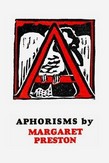
Margaret Preston's 92 Aphorisms have only appeared in a rare limited edition Recent Paintings 1929. This compilation offers the original design, the aphorisms and ten Preston woodcuts.
NO 46 WHY THERE ARE SO MANY TABLES OF STILL LIFE IN MODERN PAINTINGS IS BECAUSE THEY ARE REALLY LABORATORY TABLES ON WHICH AESTHETIC PROBLEMS CAN BE ISOLATED Margaret Preston's 92 Aphorisms have only appeared in a rare limited edition Recent Paintings 1929. This compilation offers the original design, the aphorisms and ten Preston woodcuts. NO ......
Arthur Roberts was a schoolmaster in country NSW (1861 to 1894) and it was education and the changing educational system that shaped his life. Born in the hop-growing region of Kent, England, his life and prospects were transformed by a wave of educational reform that carried him far from family, class and country.
The stories of Renate Yates are admired for their exploration of the foibles, frailties and expectations of people. They are beautifully crafted and perceptive.
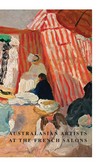
From 1872 to 1939, a significant number of Australian and New Zealand artists were chosen for exhibition at the annual French Salons. The imprimatur of the Salons bestowed prestige, publicity and visibility, and increased an artist’s saleability, both at home and abroad. But the character of the Salons fragmented over time and selection became ......
From 1872 to 1939, a significant number of Australian and New Zealand artists were chosen for exhibition at the annual French Salons. The imprimatur of the Salons bestowed prestige, publicity and visibility, and increased an artist’s saleability, both at home and abroad.