Integrating Vocabulary, Children's Literature, and Think-Alouds to Enhance Literacy
"Israel offers an organized resource for teaching vocabulary and provides word lists, literature connections and extensions, journal prompts, and additional resources for teachers. The book's organization allows a teacher to pick and choose where to start and what to include." -Anita Barnes, Literacy and Math Specialist Second Street School, Frankfort, KY "A valuable resource for teachers who want to increase their students' vocabulary." -Gustava Cooper-Baker, Principal Sanford B. Ladd Elementary School, Kansas City, MO Engage young children with this creative and strategic approach for building early literacy skills! Helping PreK and primary-grade educators improve young students' oral language and build strong reading and writing skills, this practical resource is the ideal tool for planning literacy instruction based on the National Reading Panel's recommendations for vocabulary development. Unique in its thematic approach to developing students' vocabulary, this book provides word lists, literature selections, and teaching strategies for building young learners' vocabulary and comprehension skills. Based on original research conducted by Susan E. Israel and Edward B. Fry, the lists are comprised of words used frequently by children in their writing, as well as additional words to enhance learning. Each thematic chapter offers: Literacy integrations for reading and writing in the classroom Writing prompts to integrate with journal activities Read-aloud suggestions from children's literature Think-alouds to enhance vocabulary Vocabulary Lists and Activities for the PreK-2 Classroom not only fills a gap in the field of reading and writing instruction but also provides a wealth of activities and vocabulary words organized around topics appropriate for primary students.
Laura Robb provides teachers with a way to be systematic with vocabulary instruction so that students gain the multiple exposures to words they need in order to acquire them. With an emphasis on teaching students in the midst of authentic reading situations, Robb augments her lessons with passages and short texts and reproducibles included in the book. Thus, each of the dozens of lessons in the book involves complex text interactions, group work, and independent practice. Chapters address roots, suffixes, and prefixes; figurative language; general academic and domain-specific vocabulary; and informative assessments. The strategies apply across the content areas and emphasize understanding words within context.
"Offers exciting information organized and presented in a format that is easy to read, understand, and to use in the classroom . . . accessible to teachers in all the subject areas." Pamela Fannin Wilkinson, Educational consultant Houston, TX Energize your lesson planning ideas through the creativity and inspiration of the visual arts! Are you struggling to create memorable, exciting, and effective lesson plans? This invaluable resource demonstrates how you can use the visual arts to provide imaginative lesson plans for all subject areas-from language arts to physical education. Each chapter highlights lesson planning ideas, artists, and works of art, which are given focus by visual thinking questions. Suggested readings and links to websites that offer color images of works of art are also included, while an Idea Guide provides suggestions for fine-tuning both lessons and student assignments. Learn how you can use the visual arts to: Provide imaginative lesson plans for all subject areas Discover thought-provoking ideas and new ways of teaching in the content areas Appeal to the learning styles of a broad range of students, including gifted and talented learners Meet the needs of an integrated curriculum Visual Knowing is an innovative resource to energize your approach to everyday lesson planning by bringing art and creativity to required curriculum topics.
"Offers exciting information organized and presented in a format that is easy to read, understand, and to use in the classroom . . . accessible to teachers in all the subject areas." Pamela Fannin Wilkinson, Educational consultant Houston, TX Energize your lesson planning ideas through the creativity and inspiration of the visual arts! Are you struggling to create memorable, exciting, and effective lesson plans? This invaluable resource demonstrates how you can use the visual arts to provide imaginative lesson plans for all subject areas-from language arts to physical education. Each chapter highlights lesson planning ideas, artists, and works of art, which are given focus by visual thinking questions. Suggested readings and links to websites that offer color images of works of art are also included, while an Idea Guide provides suggestions for fine-tuning both lessons and student assignments. Learn how you can use the visual arts to: Provide imaginative lesson plans for all subject areas Discover thought-provoking ideas and new ways of teaching in the content areas Appeal to the learning styles of a broad range of students, including gifted and talented learners Meet the needs of an integrated curriculum Visual Knowing is an innovative resource to energize your approach to everyday lesson planning by bringing art and creativity to required curriculum topics.
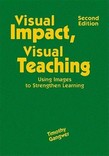
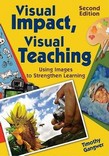
"Hold on to this author-he is magical! I learned more from reading Gangwer's book than I have in eight years of professional development workshops." -Laura S. Gulledge, Media Literacy Teacher Benjamin Russell High School, Alexander City, AL "Gangwer has effectively organized information from many sources into a form that is readable and practical for a wide variety of education practitioners, including classroom teachers and fine arts teachers." -Ellen Herbert, Art Teacher Longview High School, TX Spark learners' enthusiasm and promote retention of content with visual teaching techniques! Each day, teachers look for new ways to get students excited about learning and new ways to help them retain the information they learn. In this practical guide, Timothy Gangwer incorporates the latest research on visual learning and shows how you can stimulate students' interest and participation. Offering classroom-tested techniques to engage learners' brains, this book includes hundreds of ready-to-use visual learning activities in language arts, math, science, social studies, environmental studies, the arts, and more. This resource covers: Differentiating instruction based on how students process visual information Using graphic organizers, digital photography, the Internet, and other visual communication tools Incorporating music, art, and drama to enhance instruction and learning Teaching visual communication strategies to English language learners Discover how to use visual strategies and activities to help students think critically about the way they understand and perceive the world.
"Hold on to this author-he is magical! I learned more from reading Gangwer's book than I have in eight years of professional development workshops." -Laura S. Gulledge, Media Literacy Teacher Benjamin Russell High School, Alexander City, AL "Gangwer has effectively organized information from many sources into a form that is readable and practical for a wide variety of education practitioners, including classroom teachers and fine arts teachers." -Ellen Herbert, Art Teacher Longview High School, TX Spark learners' enthusiasm and promote retention of content with visual teaching techniques! Each day, teachers look for new ways to get students excited about learning and new ways to help them retain the information they learn. In this practical guide, Timothy Gangwer incorporates the latest research on visual learning and shows how you can stimulate students' interest and participation. Offering classroom-tested techniques to engage learners' brains, this book includes hundreds of ready-to-use visual learning activities in language arts, math, science, social studies, environmental studies, the arts, and more. This resource covers: Differentiating instruction based on how students process visual information Using graphic organizers, digital photography, the Internet, and other visual communication tools Incorporating music, art, and drama to enhance instruction and learning Teaching visual communication strategies to English language learners Discover how to use visual strategies and activities to help students think critically about the way they understand and perceive the world.
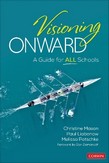
Follow this book's iterative visioning process to sharpen your vision into a personalized road map for transformative change. Features include thought-provoking vignettes, case studies from exemplary schools, common trends at the heart of impactful, positive change, key strategies and tools for building a shared vision, and practical implementation ideas.
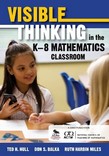
Do you ever wish your students could read each other's thoughts? Now they can-and so can you! Veteran mathematics educators Ted Hull, Don Balka, and Ruth Miles explain why making students' thought processes visible is the key to effective mathematics instruction. Their newest book contains numerous grade-specific sample problems and instructional strategies for teaching essential concepts such as number sense, fractions, and estimation. Among the many benefits of visible thinking are: - Interactive student-to-student learning - Increased class participation - Development of metacognitive thinking and problem-solving skills. Helpful features include vignettes, relevant word problems, classroom scenarios, sample problems, lesson adaptations, and easy-to-follow examples of each strategy in action. The authors also explain how students can demonstrate their thinking using calculators and online tools. The final chapter outlines steps maths leaders can take to implement visible thinking and maximize mathematics comprehension for all students.
Visible Learning in Early Childhood investigates the critical years of early childhood and, backed by evidence from the Visible Learning (R) research, explores seven core strategies for learning success.